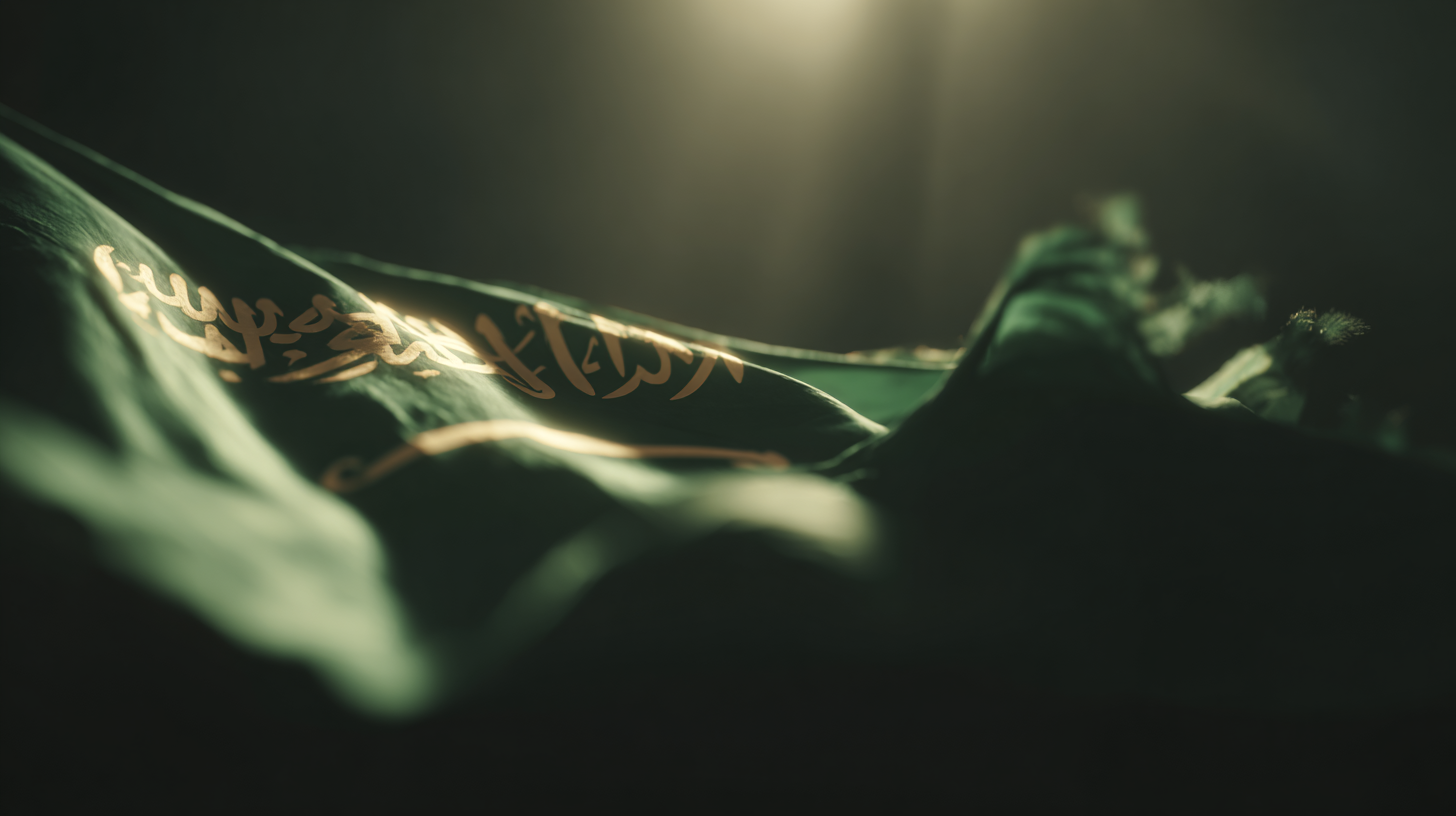
A nation’s pattern, decoded
A film to honour the 95th Saudi National Day, and, beneath it, a deep research program that reverse-engineered the Kingdom’s visual language into a reusable system. A gift to the country, and the foundation under everything we build next.
On 23 September 1932, a royal decree unified the Kingdom; the 23rd of September 2025 marked its 95th National Day. We did not want to post a greeting. We wanted to earn the right to speak in the Kingdom’s visual language so we treated the occasion as a research commission. We took the motifs a nation lives inside but rarely dissects, the geometry of its ornament, the exact green of its flag, the script of its emblem, the weave of its heritage and rebuilt them from first principles into a system we now carry into every Saudi project. The film below is the visible 1%. The other 99% is the science underneath.
Not a greeting. A research commission.
Every brand in the region posts something green on the 23rd of September. Most of it is decoration, a flag overlay, a stock crowd, a hashtag. We saw the opposite opportunity: National Day as the one moment a studio is invited to study a nation’s identity with full seriousness, and to give something back that actually advances the craft.
So we set a rule. Nothing in the film would be a borrowed cliché. Every motif had to be understood, its geometry, its history, its rules, before it earned a single frame. What started as a tribute became the most valuable R&D we have ever run.
- 1932
- the unification this day commemorates, 95 years on
- 9-fold
- symmetry order at the heart of the ornament we rebuilt
- 1
- reusable motif system, born from this single project
- ∞
- future works it now quietly powers
Decode the pattern, then you can speak it
A culture’s ornament is not random; it is a grammar. Islamic geometric design is generated, not drawn, a small set of construction rules unfolds into infinite, non-repeating complexity. If you only copy the surface, you get pastiche. If you recover the rules, you can generate anything in the language, correctly, forever.
That was the whole programme: catalogue the Kingdom’s motifs, reverse-engineer the systems that produce them, and rebuild each one parametrically so it could drive composition, motion and light. Below is how the research was structured and what each strand taught us.
From motif to method
Unlike a product job, this graph runs research-first: every visual strand is decoded into a rule-set, the rule-sets feed a shared motif library, and only then does generation begin so the film is downstream of understanding, not the other way round.
- Archive study — ornament · script · weave
- Geometry — girih · n-fold rules
- Colour science — spectral palette
- Calligraphy — Thuluth proportion
- Motif library — parametric · reusable
- Conditioned frames — motif-locked
- Motion — falcon · skyline · fire
- Original score — oud · choir · sub
- Film + stills — graded · mastered
The ornament is generated, not drawn
Saudi and broader Islamic ornament is built on the polygons-in-contact method: a hidden tiling of polygons whose edges seed a web of crossing lines, the girih. We rebuilt the Kingdom’s recurring stars parametrically, with the nine- and twelve-fold rosettes that dominate Najdi and sacred ornament expressed as pure rule-sets. Change one angle and the entire field re-solves, still perfectly closed, still non-repeating.
Why it matters for the work: a parametric motif is not a texture you paste, it is a system you can animate. We could grow a rosette out from a single point in time with the music, wrap it true around a curved surface, and never break its symmetry. Real geometry behaves; a traced JPEG does not.
The exact green, measured not guessed
A nation’s green is not a hex code you eyeball. We built a calibrated palette by sampling the flag and heritage textiles across daylight, dusk and tungsten, then reconciling them in a wide-gamut, scene-referred space (ACEScg) so the green holds its identity under every lighting state in the film, it must read as the same green whether it is silk in shadow or a flag against a noon sky.
The deeper trick is metamerism control: two greens can match under one light and diverge under another. By working spectrally rather than by eye, we locked a primary that stays true across the whole edit, and tuned a gold companion against it for the calligraphy and embroidery. One palette, physically anchored, used everywhere.
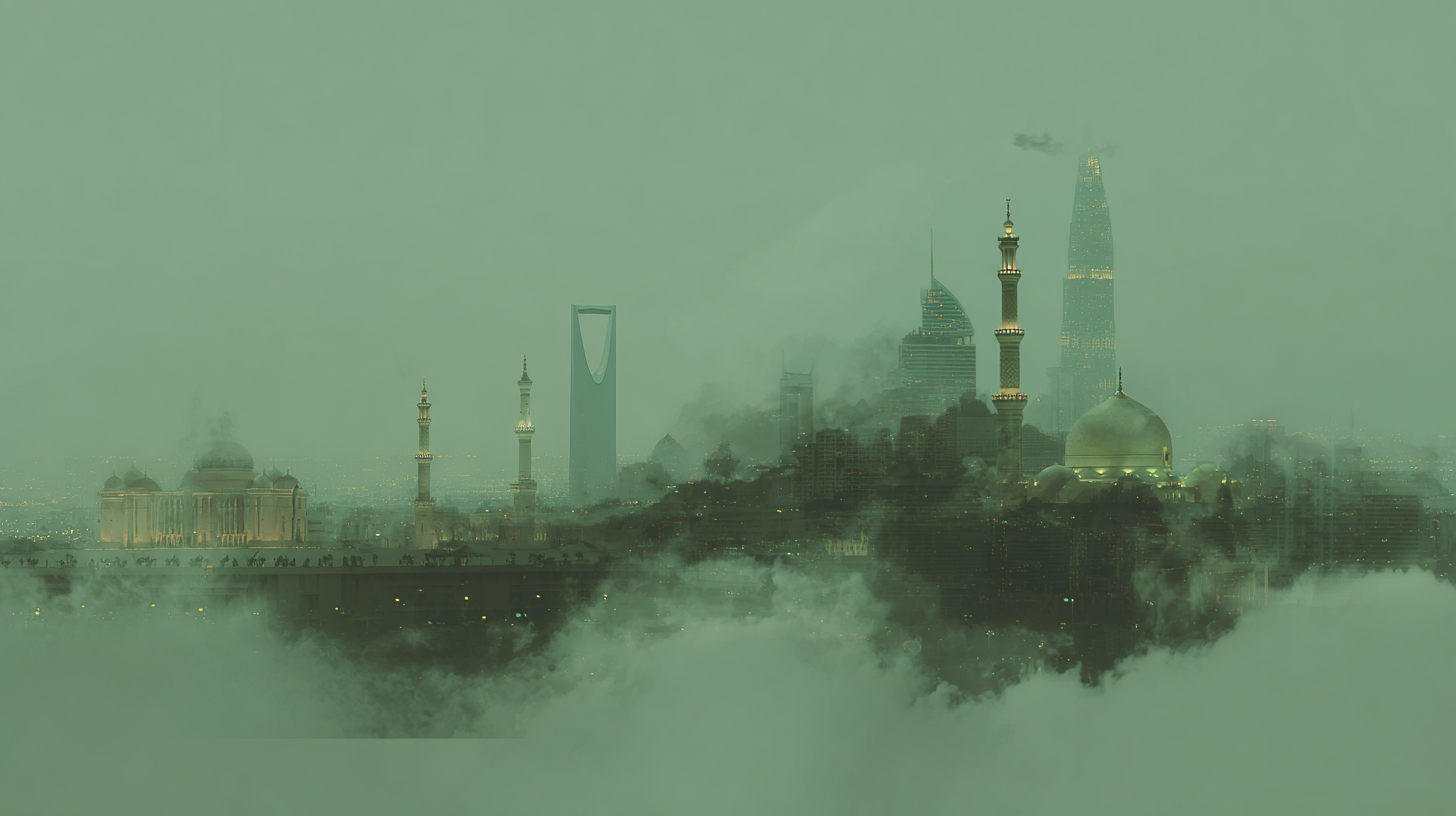
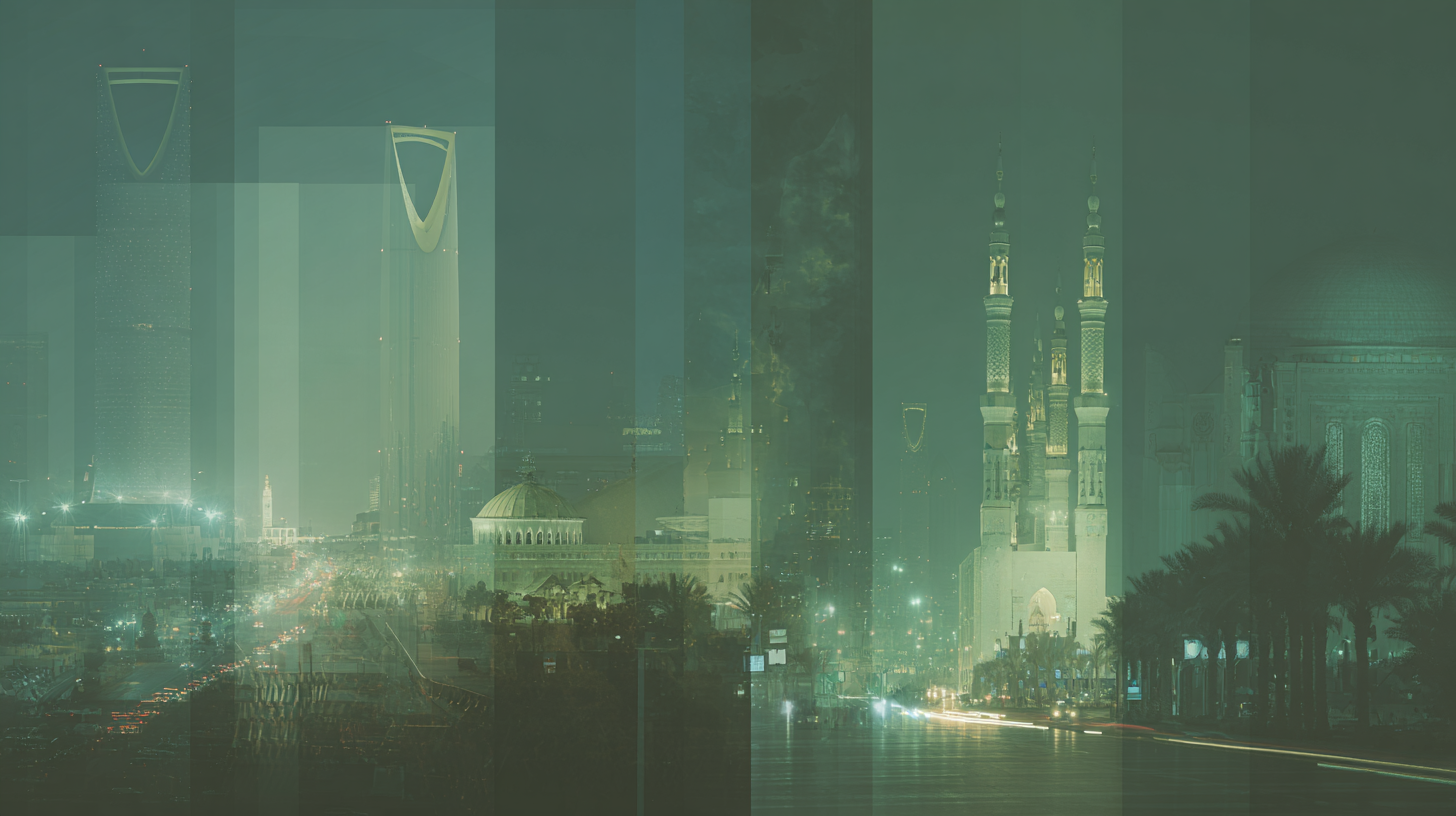
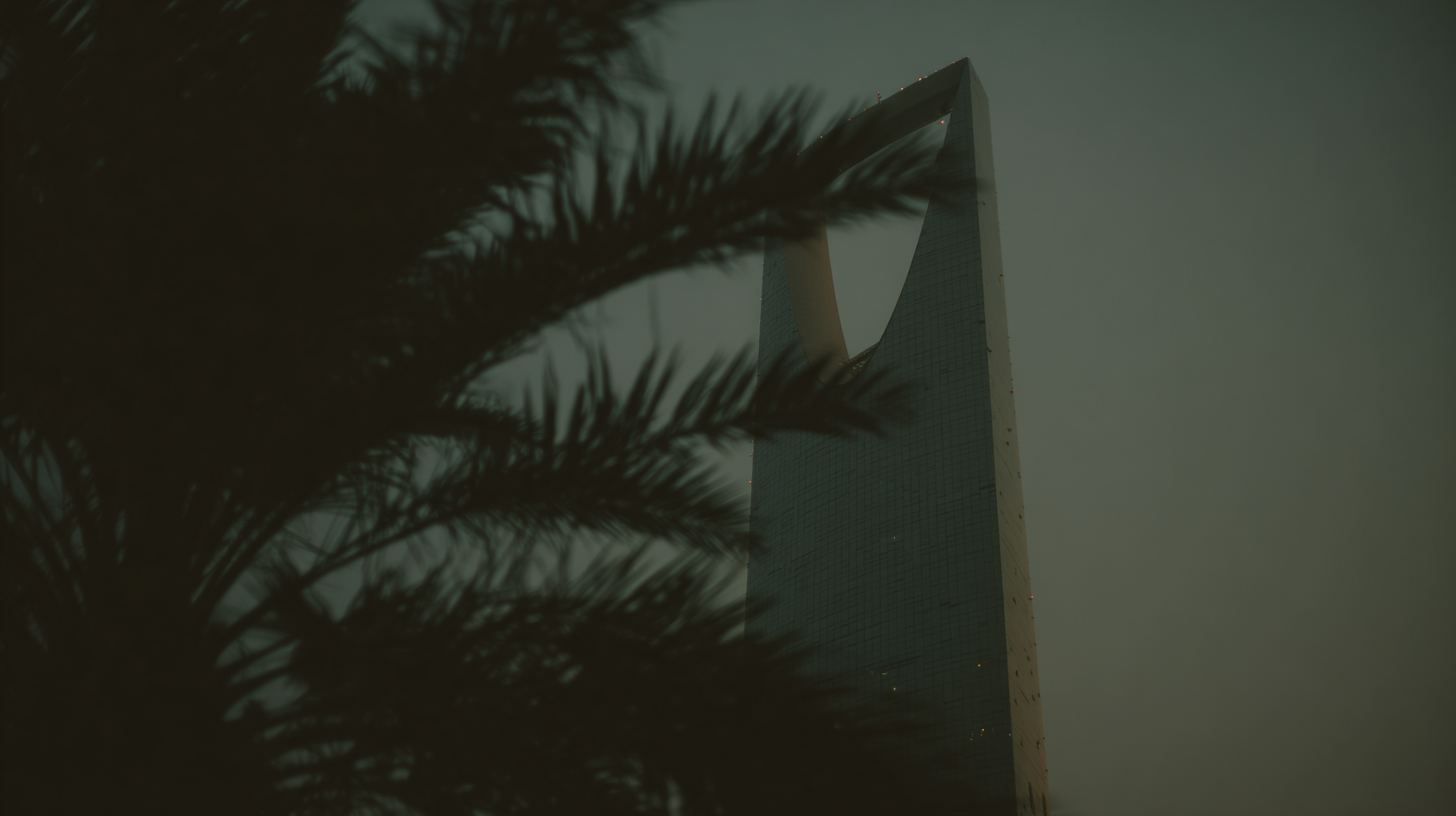
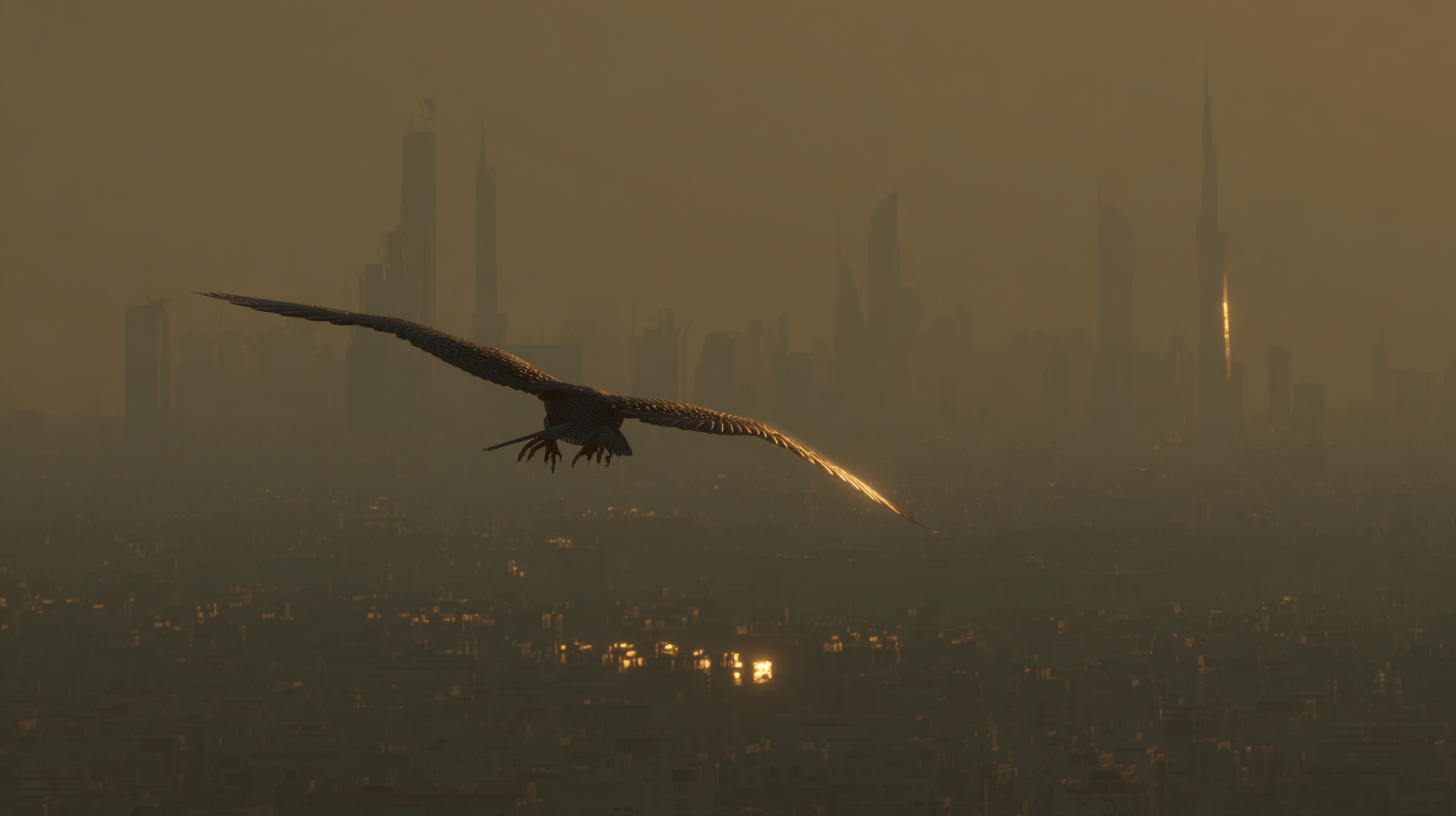
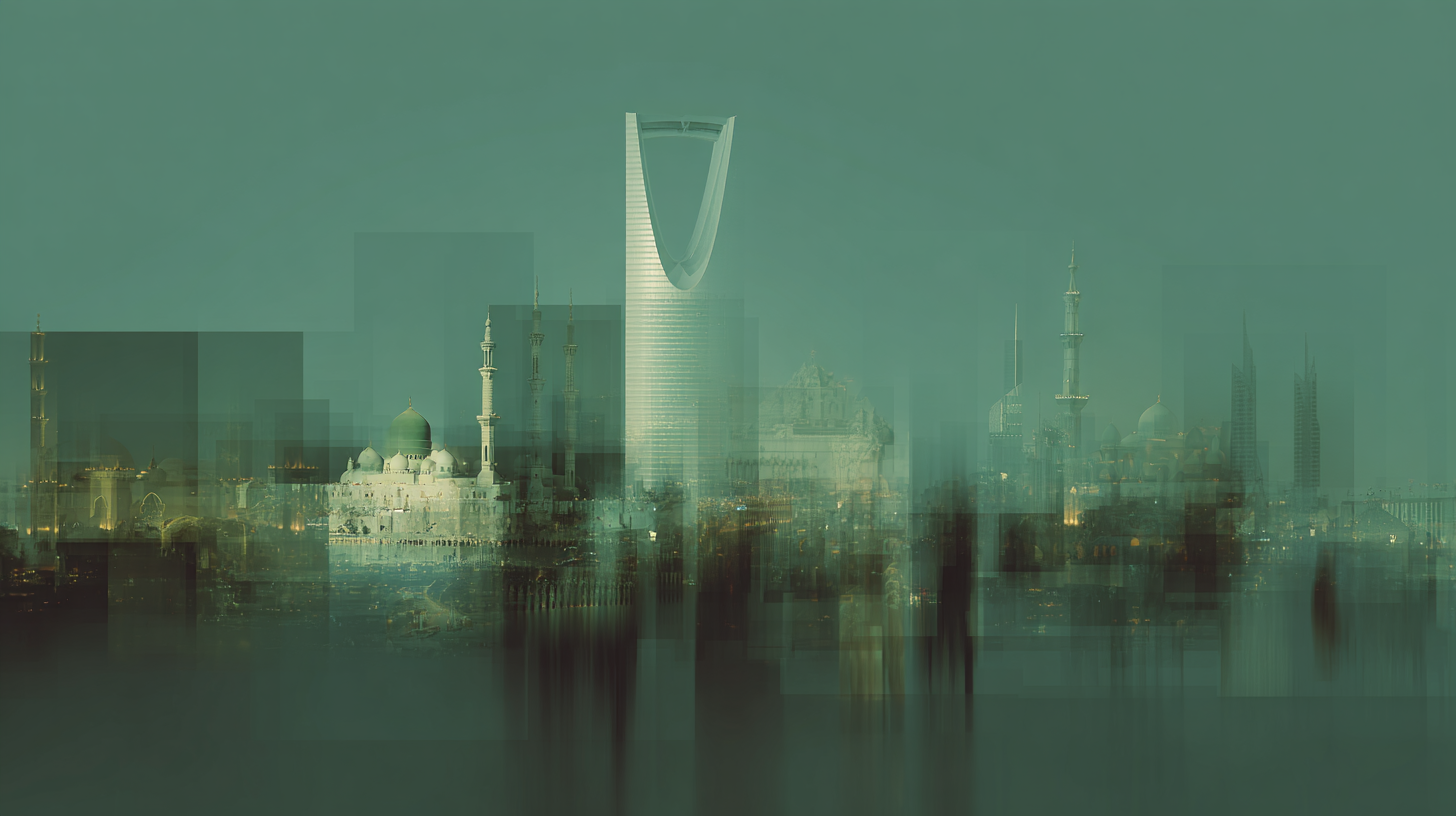
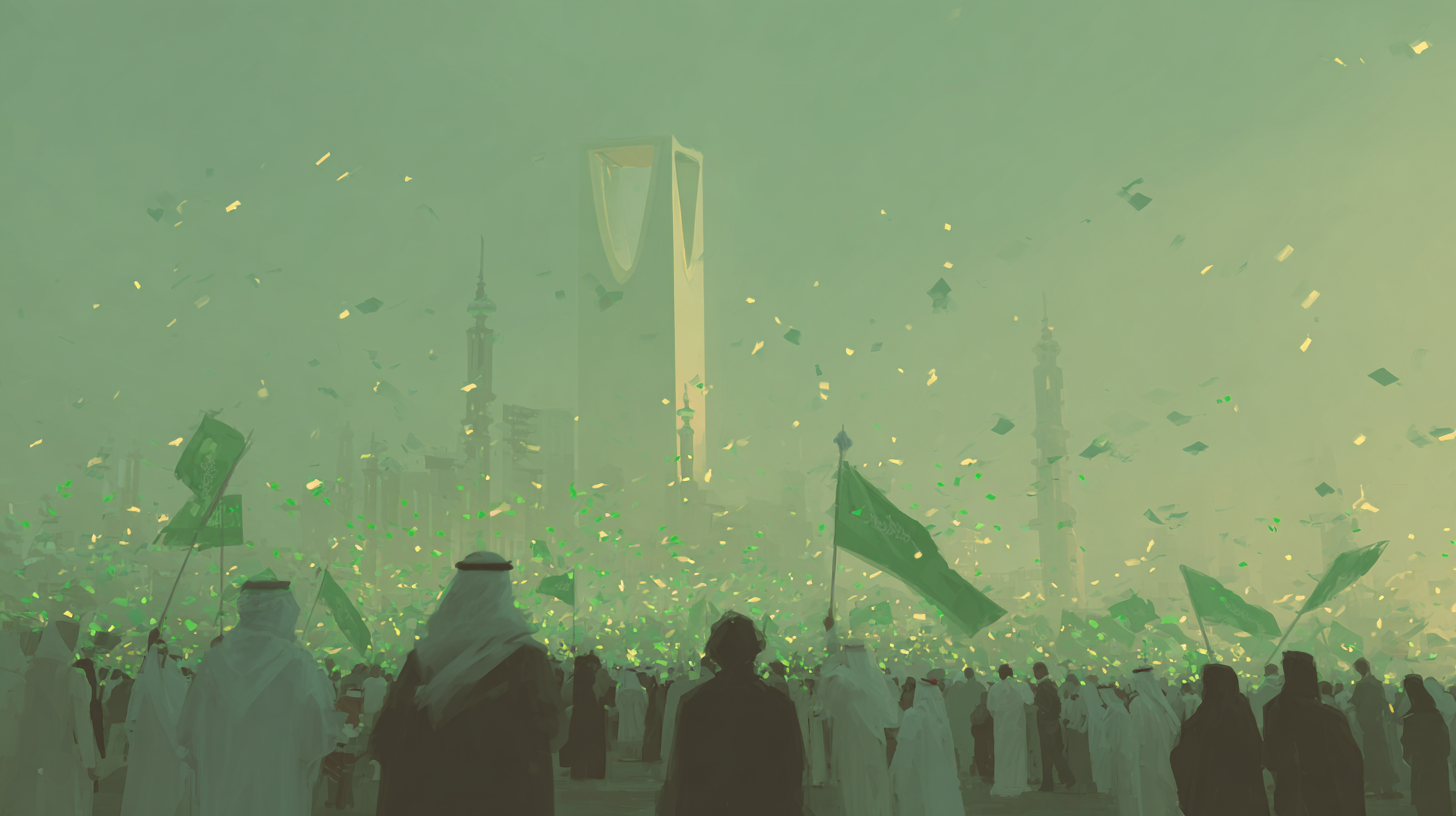
Landmark and skyline studies, the Kingdom’s heritage and its Vision-era towers, composited as long exposures to feel like memory.
Sacred script, handled by the rules
The Saudi flag is unique among the world’s flags: it bears the Shahada in Thuluth calligraphy above a sword, which is why it is never flown at half-mast and is woven two-sided so the words read correctly from both faces. That carries an absolute production rule, the script is never stretched, mirrored, distorted, or generated loosely. Ever.
So we never let a model improvise the words. The calligraphy is treated as protected artwork: set by the correct Thuluth proportion, composited on a separate, locked layer, and only the cloth, light and embroidery around it are generated. The result honours the most important element in the frame by refusing to let an algorithm near it.
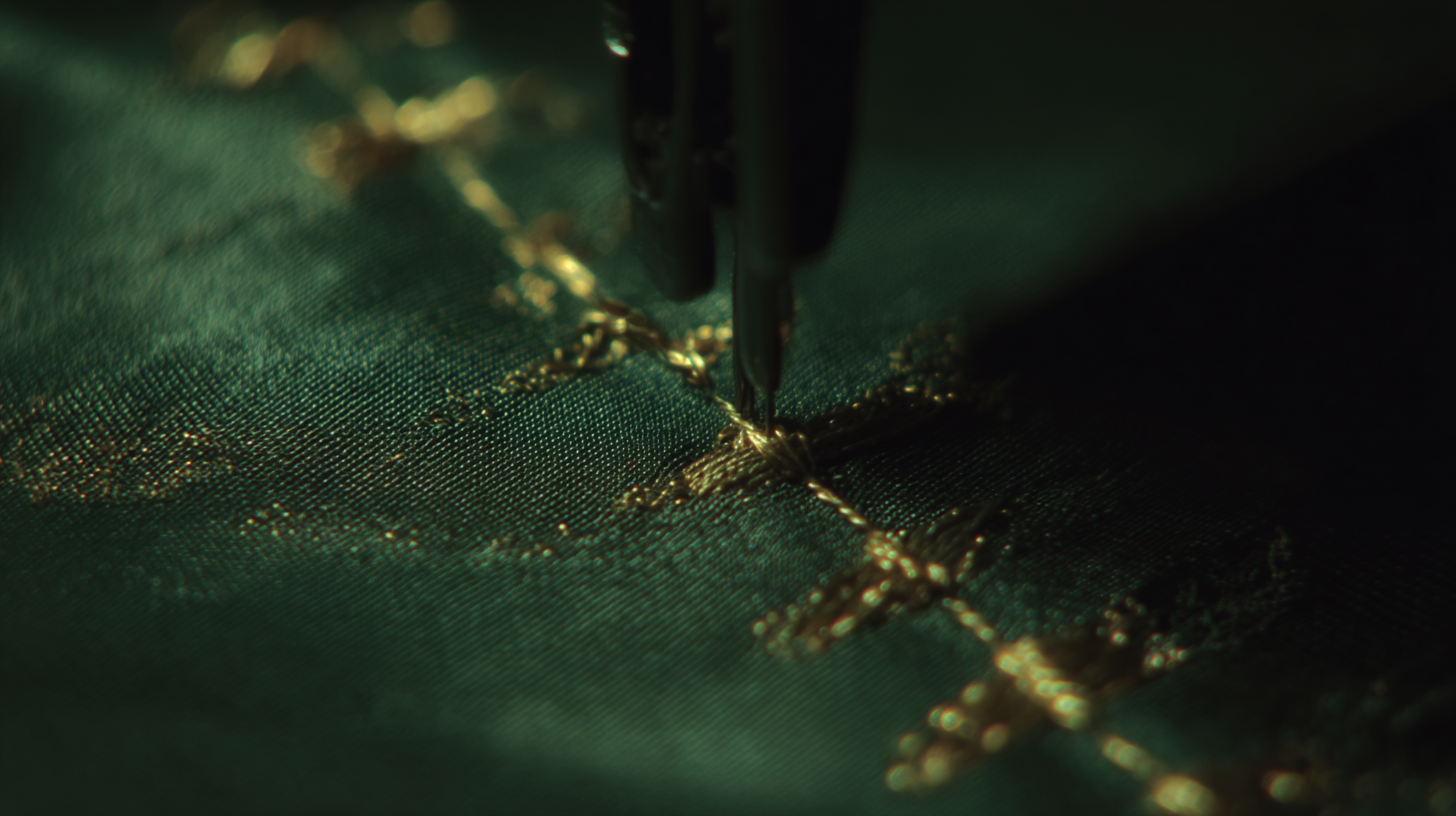
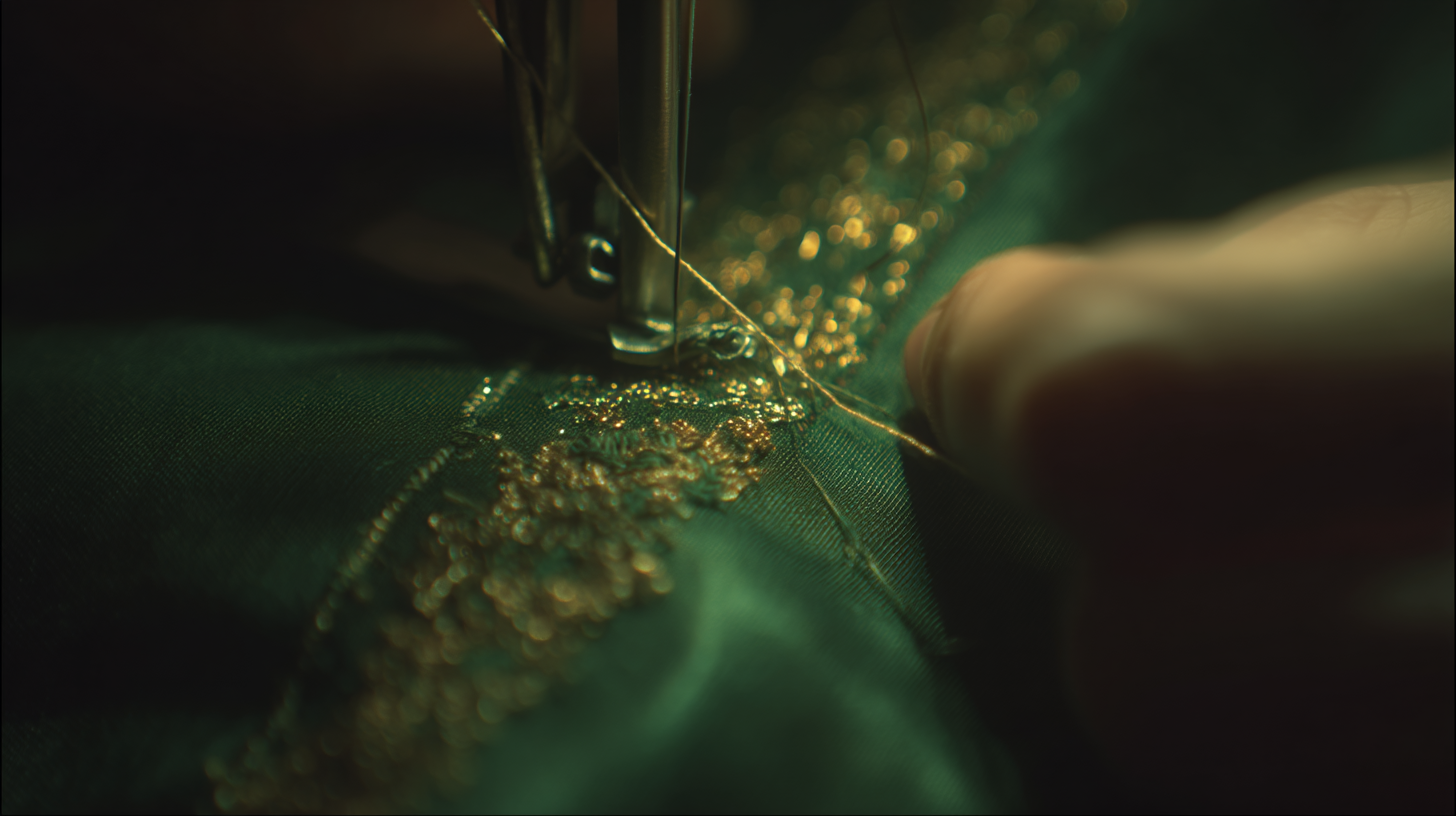
Heritage made tangible, gold-thread embroidery on green silk, studied at macro to teach the system how the material actually catches light.
Understand the pattern and you stop decorating a culture, you start speaking it.EINAI · Cultural R&D
A small pillar under a national plan
Vision 2030, launched on 25 April 2016, rests on three themes, a vibrant society, a thriving economy, and an ambitious nation and names culture and the creative industries as engines of the future, not ornaments on it. We built this project to stand, humbly, inside that ambition: a Saudi studio proving that world-class cultural media can be made in the Kingdom, in its own visual language, by its own hands.
We make no claim to the scale of the institutions driving 2030, with their aid and grace, we simply want to be one honest contributor in the creative-industries column. This film, and the research beneath it, is our argument that the work can be both deeply rooted and globally competitive at once.
Falcon, fire and an original score
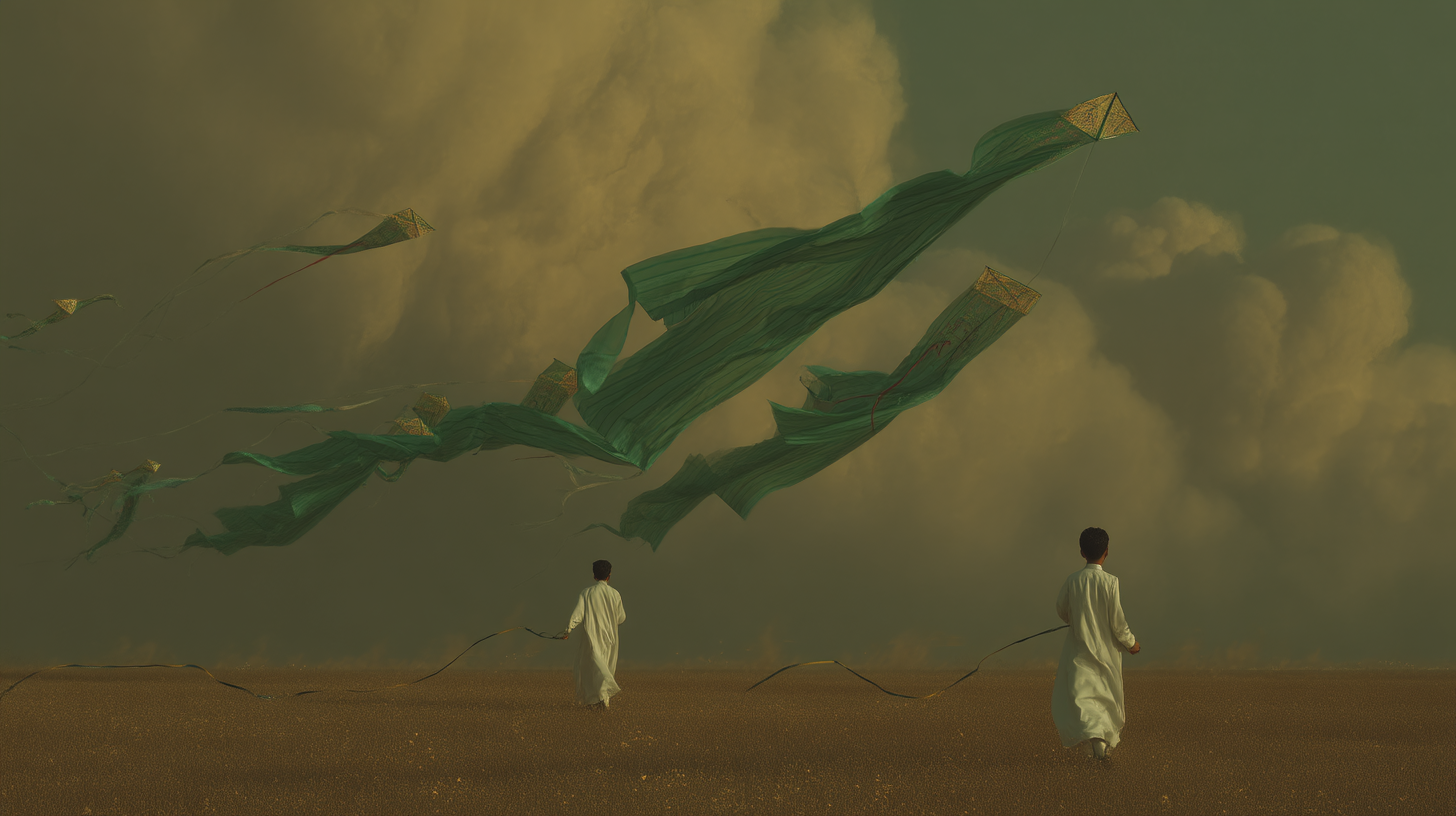
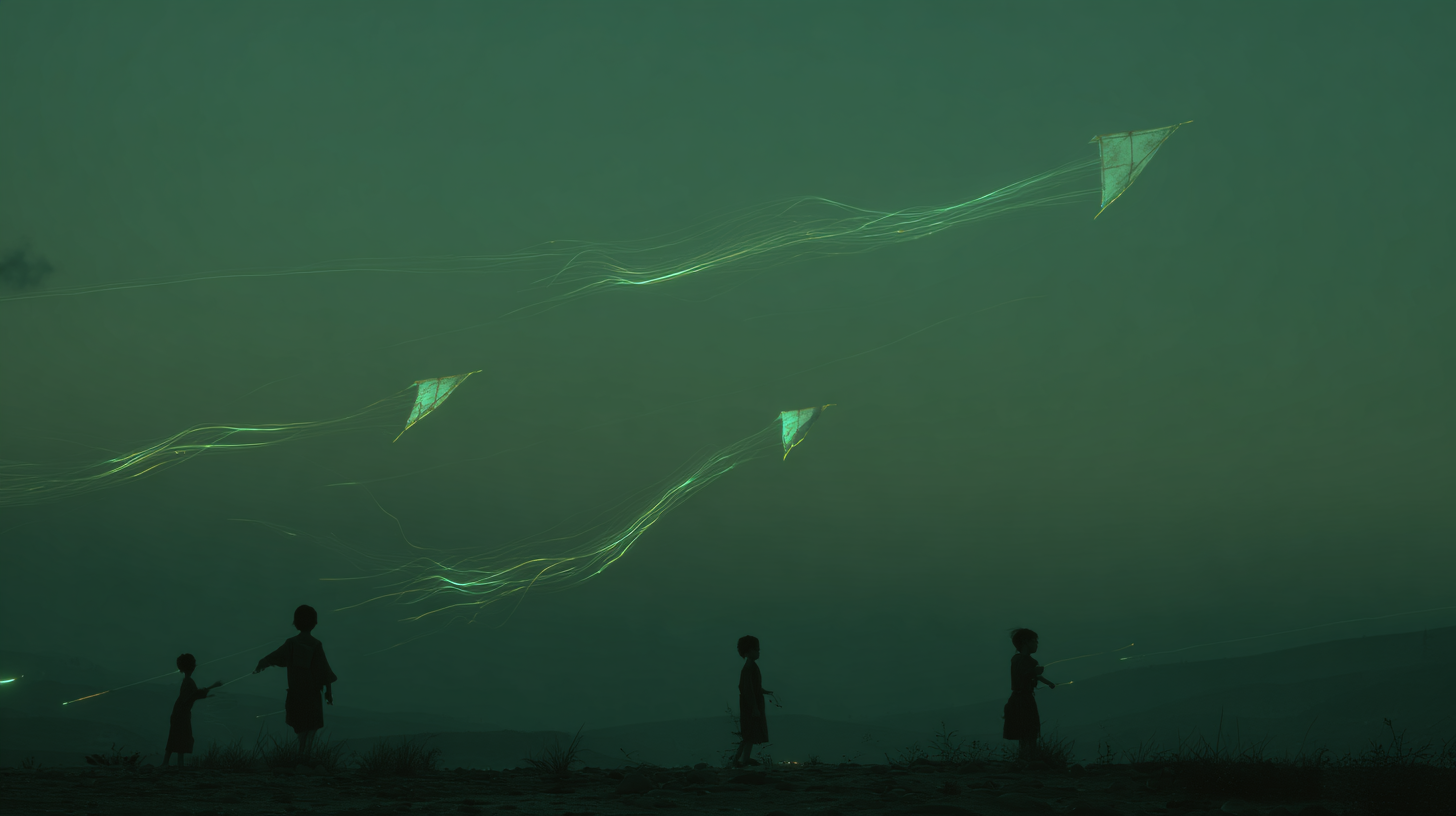
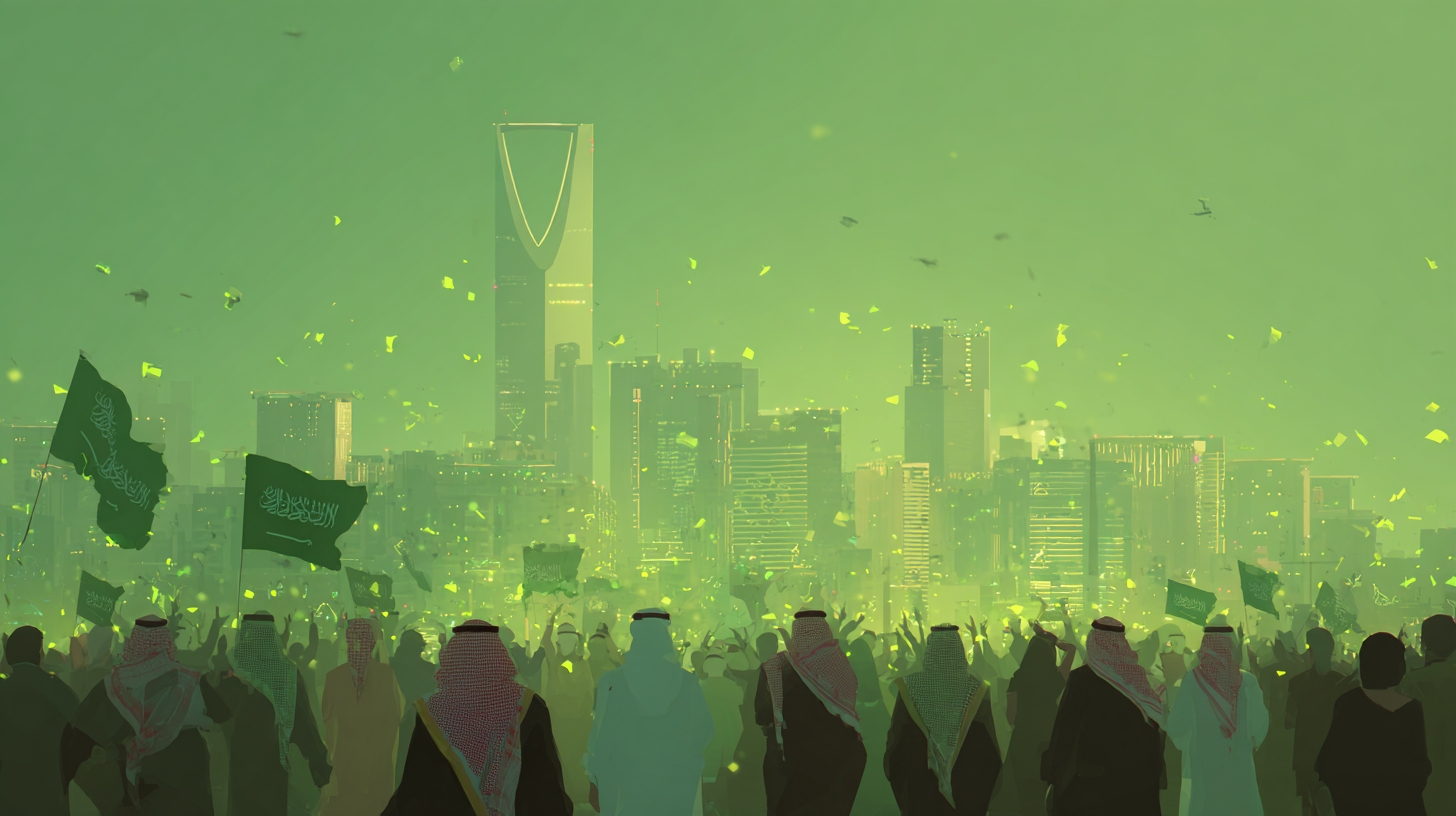
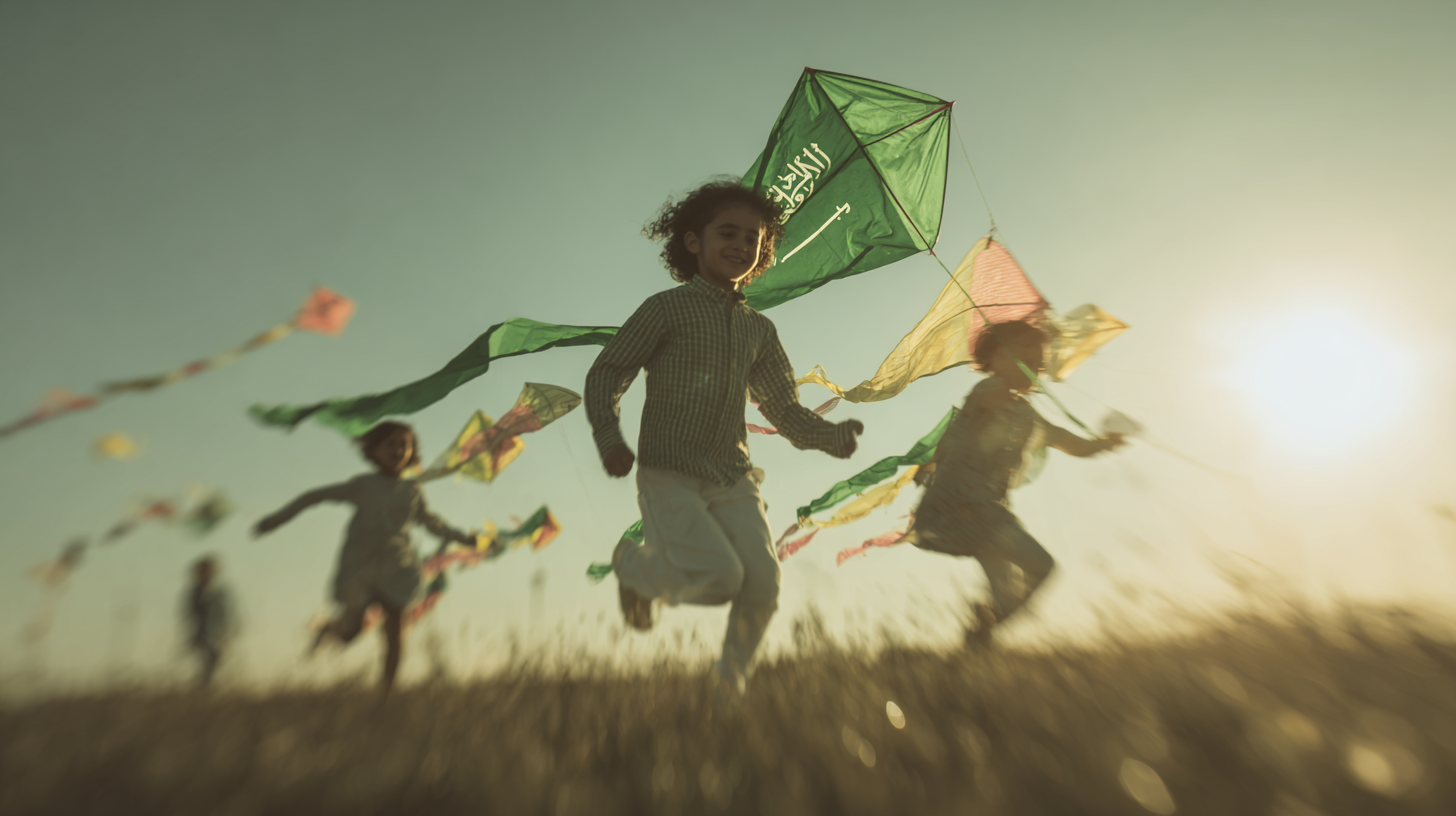
The film moves through symbols the nation knows by heart, the falcon crossing the skyline, kites over the desert, fireworks over the towers, each transition engineered, not captured. Motion was generated and then reconciled the way we reconcile every film: optical-flow stabilisation, deflicker and conformed cadence, so symbolism never wobbles into noise.
The sound is entirely ours. An oud and a choir carry the melody, instruments that belong to the land, under a designed bed of sub, wind and distant celebration, with AI textures used only as atmosphere. We scored to the cut so every reveal lands on a beat, then mixed and mastered in-house: room-matched reverbs, stem discipline, and platform-correct loudness. A national piece deserved a voice we wrote, not a track we rented.

From the same world, heritage process and celebration, cut for social.
What it left behind
- A system
- a parametric motif library we still use today
- One green
- a physically-anchored national palette
- A voice
- an original score, written and mastered in-house
The project that taught us the Kingdom’s language
Most studios treat National Day as a deadline. We treated it as a curriculum and walked away fluent. The geometry, colour, calligraphy and material research from this single film now underpins how we approach every Saudi brief: faster, because the system is built; better, because it is built on truth.
It was a gift to a country on its 95th year, and quietly, a gift to ourselves, the foundation we now build the rest on.
Inside the motif vault
The research and exploration behind the National Day film, skyline studies, motif tests, heritage process and motion experiments. This is the working archive that became our Saudi visual system.