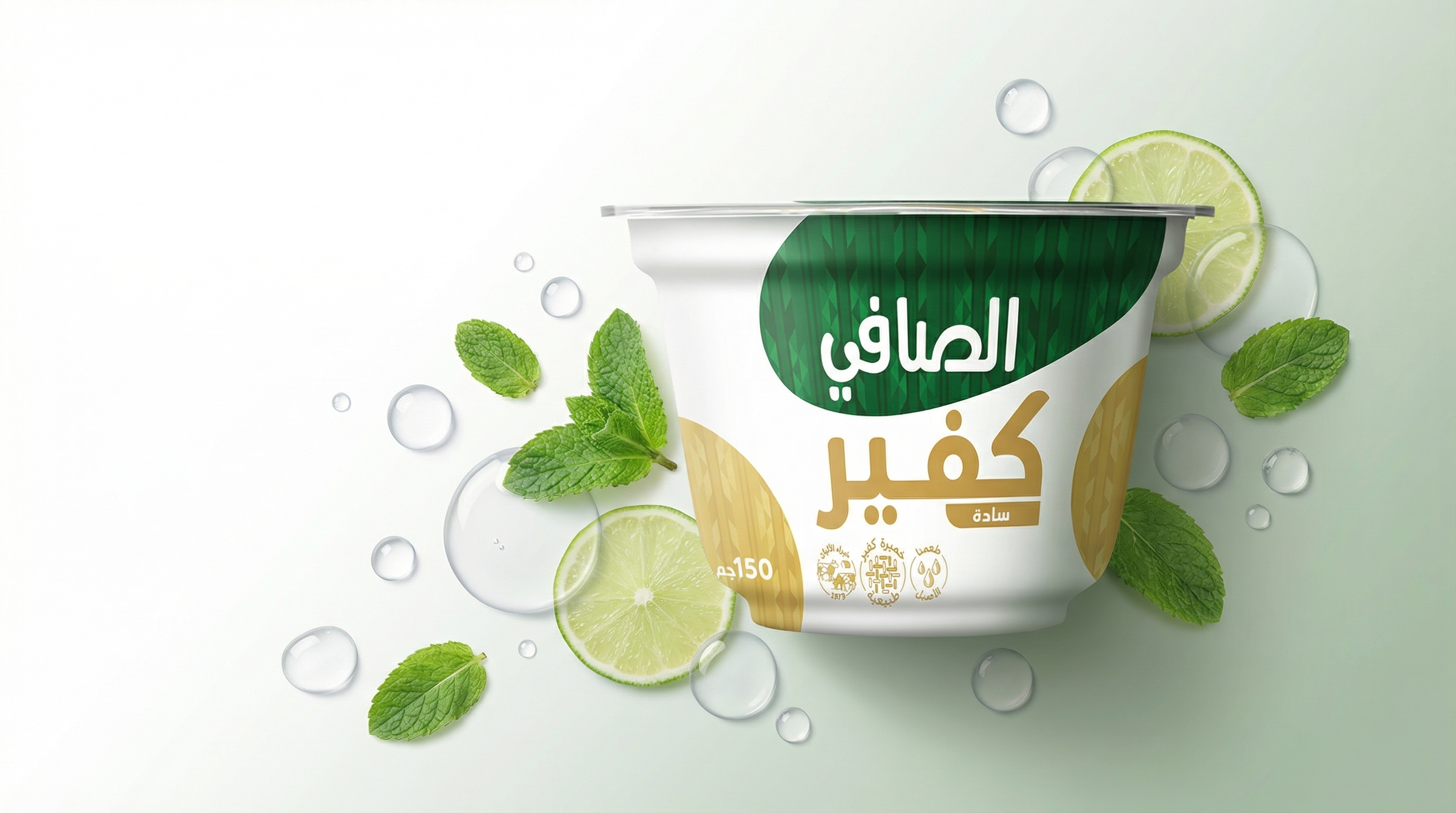
Kefir, reborn in light
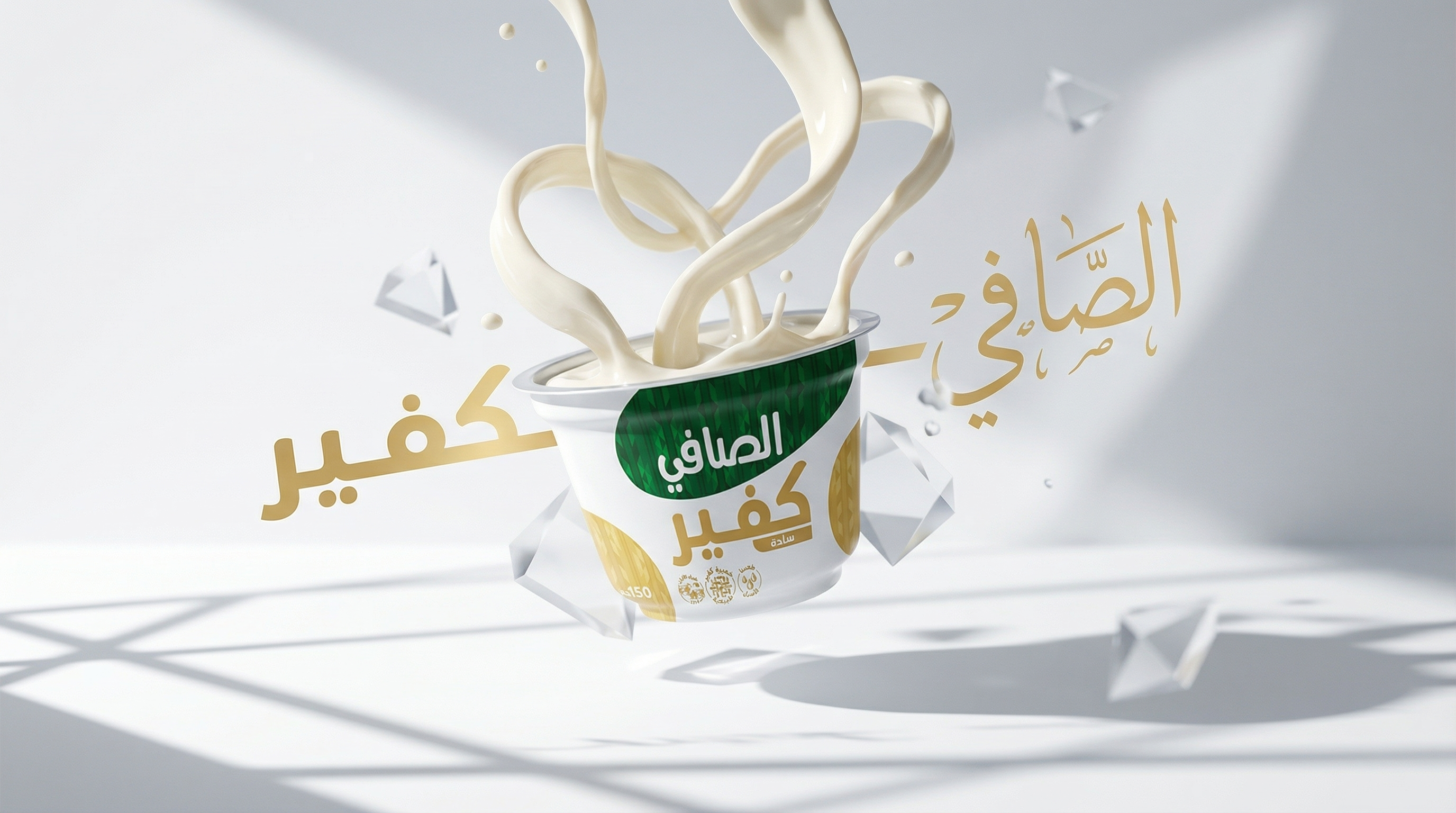
The first true AI-made media campaign to reach market in Saudi Arabia and the wider MENA region, built for the region’s largest dairy house, on a pipeline we engineered ourselves.
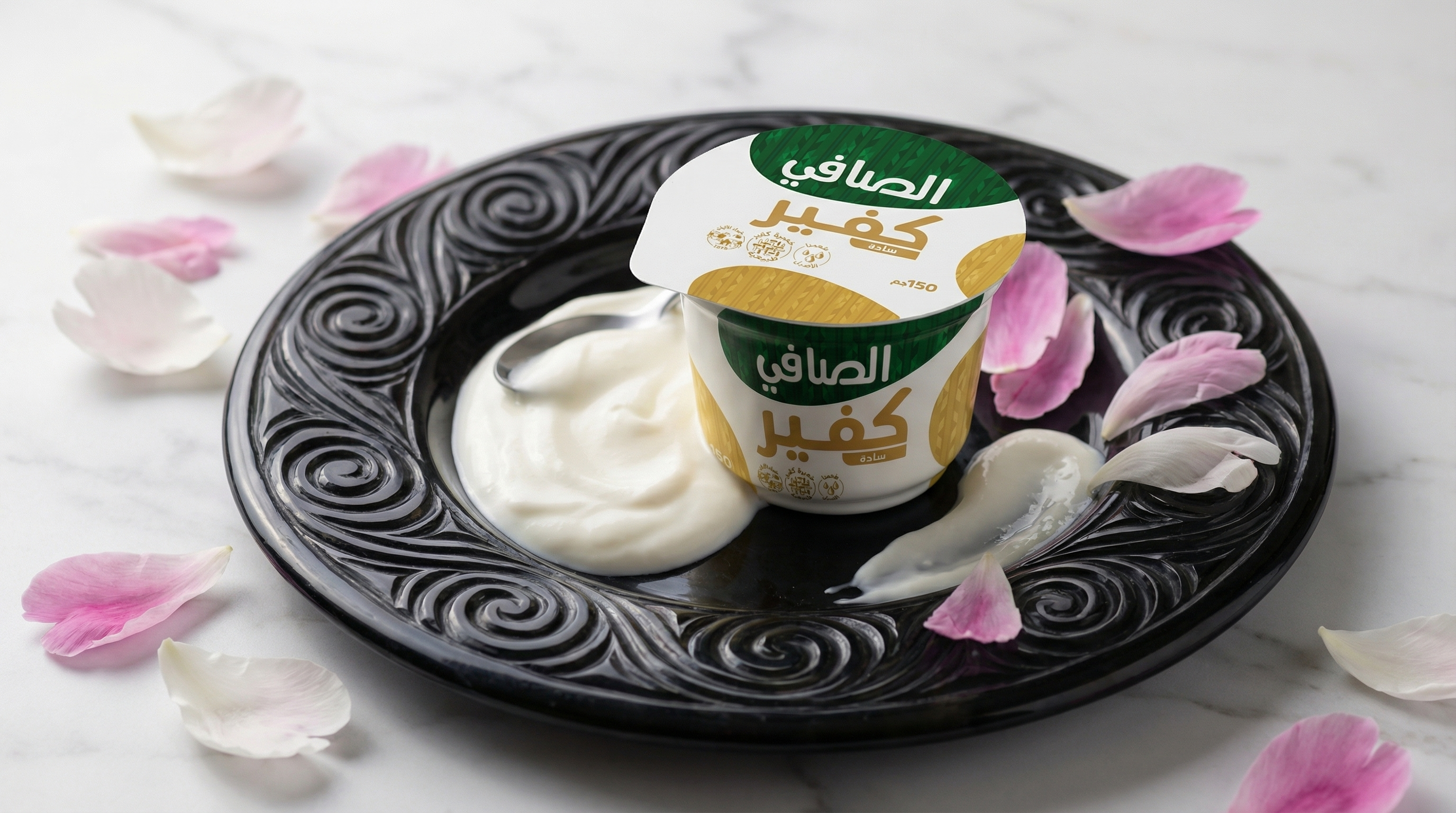
When Al-Safi, the most recognised name in regional dairy, readied its first kefir, there was no playbook for launching it. So we wrote one. The campaign you are about to see, from the first concept study to the finished reveal film, was conceived, generated, composited and finished by EINAI: no photographic shoot, no stock, no compromise. This was our first commission, and we treated it as a proof that the region could make world-class work with intelligence at the centre of the craft.
A heritage brand, a product with no precedent
Al-Safi has poured milk into the region’s homes since 1979. Kefir was different: an ancient ferment, new to the shelf, easy to misread and easy to make look cheap. The brief was deceptively simple, make the region’s first kefir feel inevitable, premium, and unmistakably Saudi and do it without the months and budget of a conventional global shoot.
The constraint was tonal: it could not look AI-made. In 2024 and 2025, generative work still announced itself through plastic light, melted type, broken hands, and an artificial sheen. A heritage brand could not afford a single such frame. So the real commission was not simply to produce images. It was to make AI hold up to a beauty-shot standard, and to be the first to do so in the region.
- Region-first
- first AI media campaign aired in KSA / MENA
- 0
- photographic shoots, every frame synthesised
- 1
- in-house pipeline, built from the ground up
- 4K
- finished in Nuke & Photoshop, frame by frame
We explore before we communicate
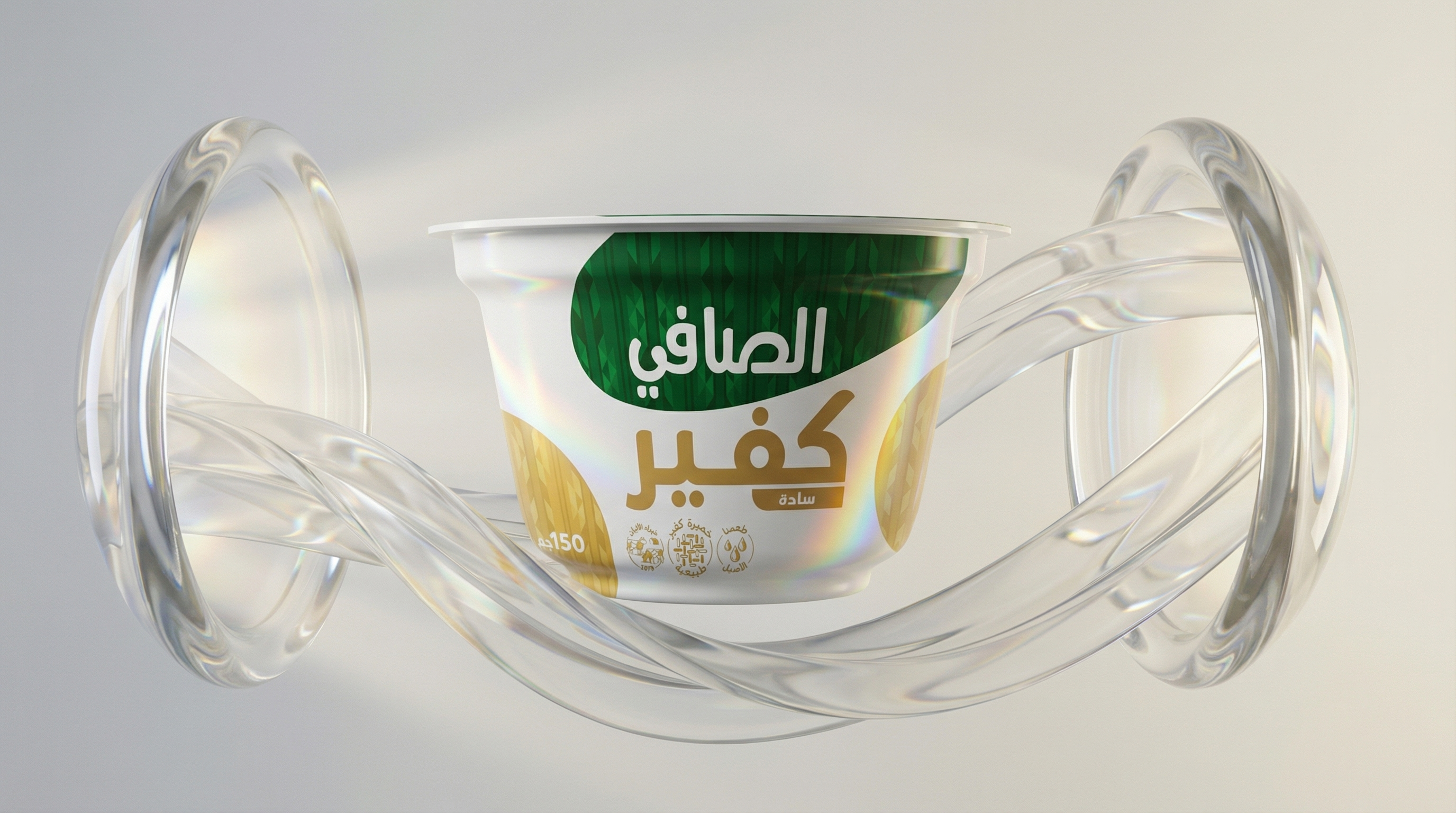
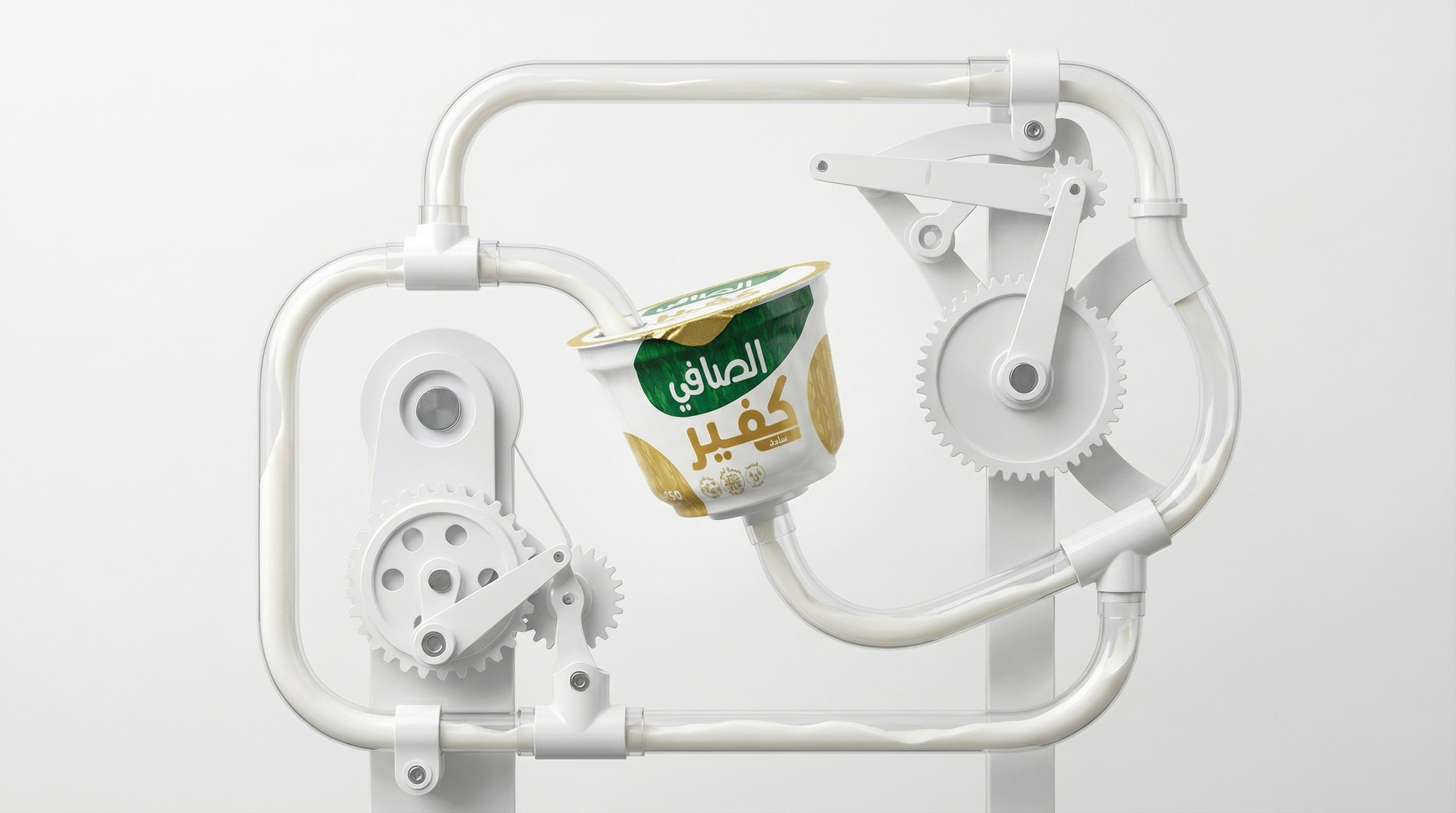
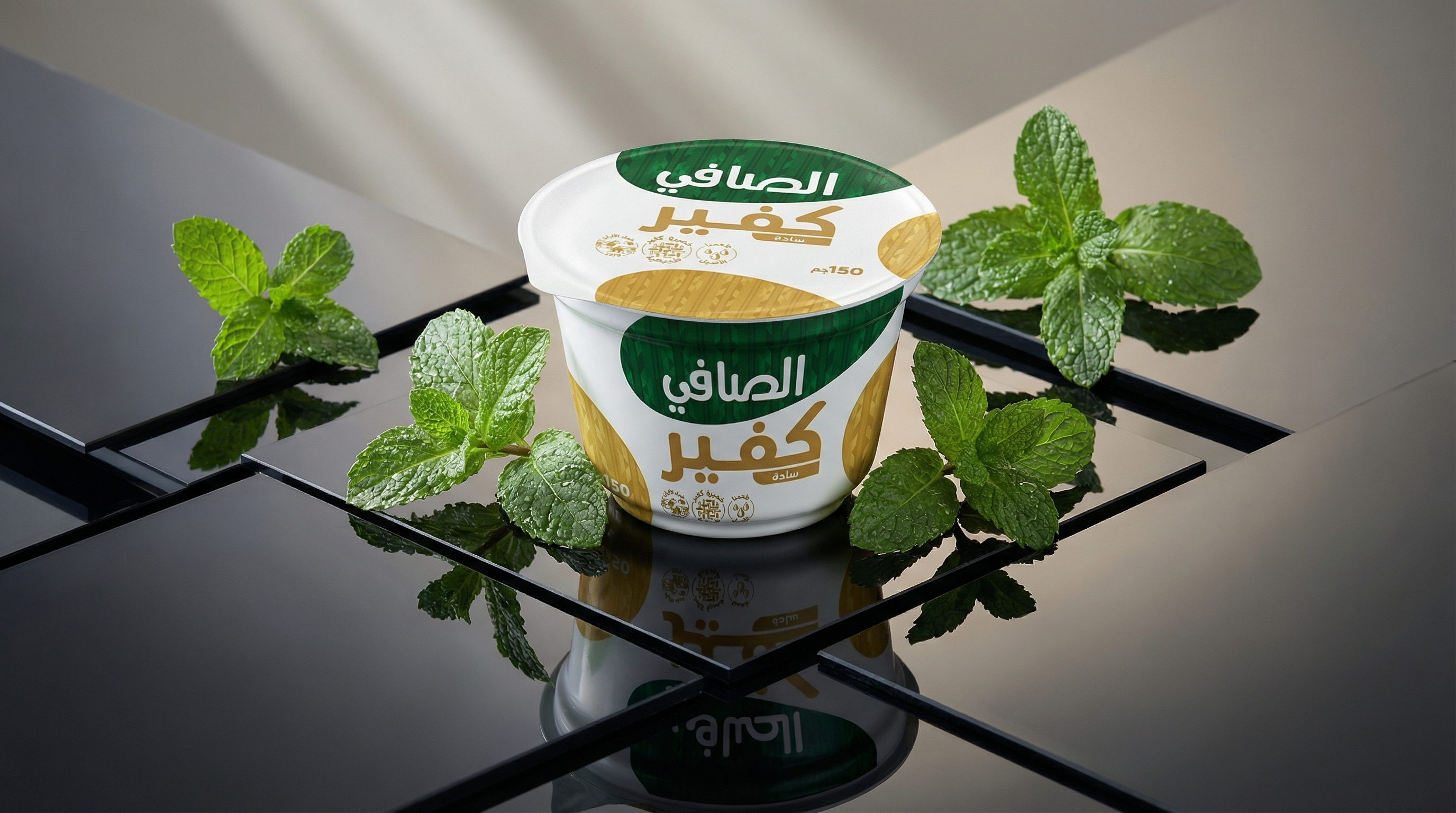
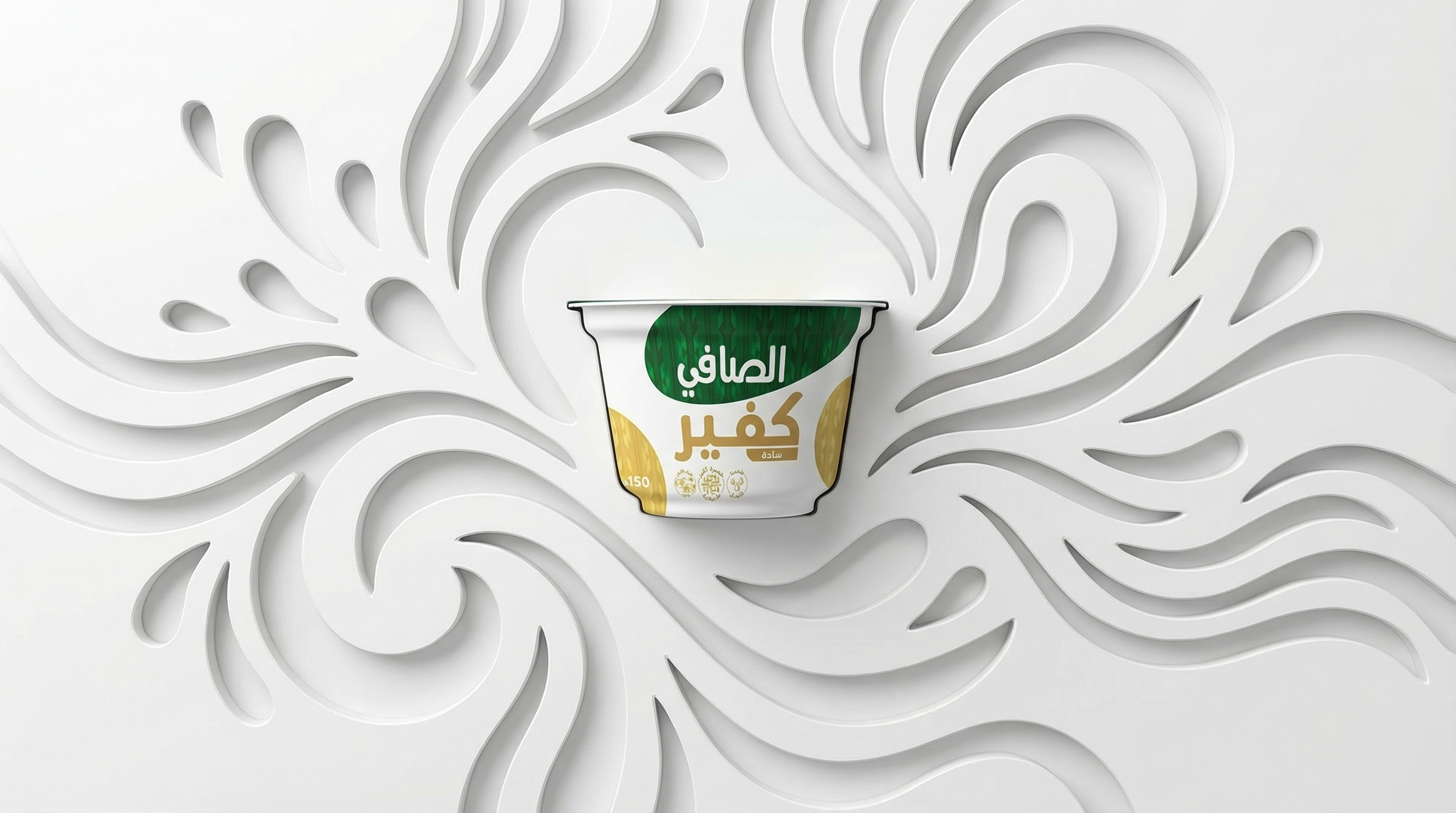
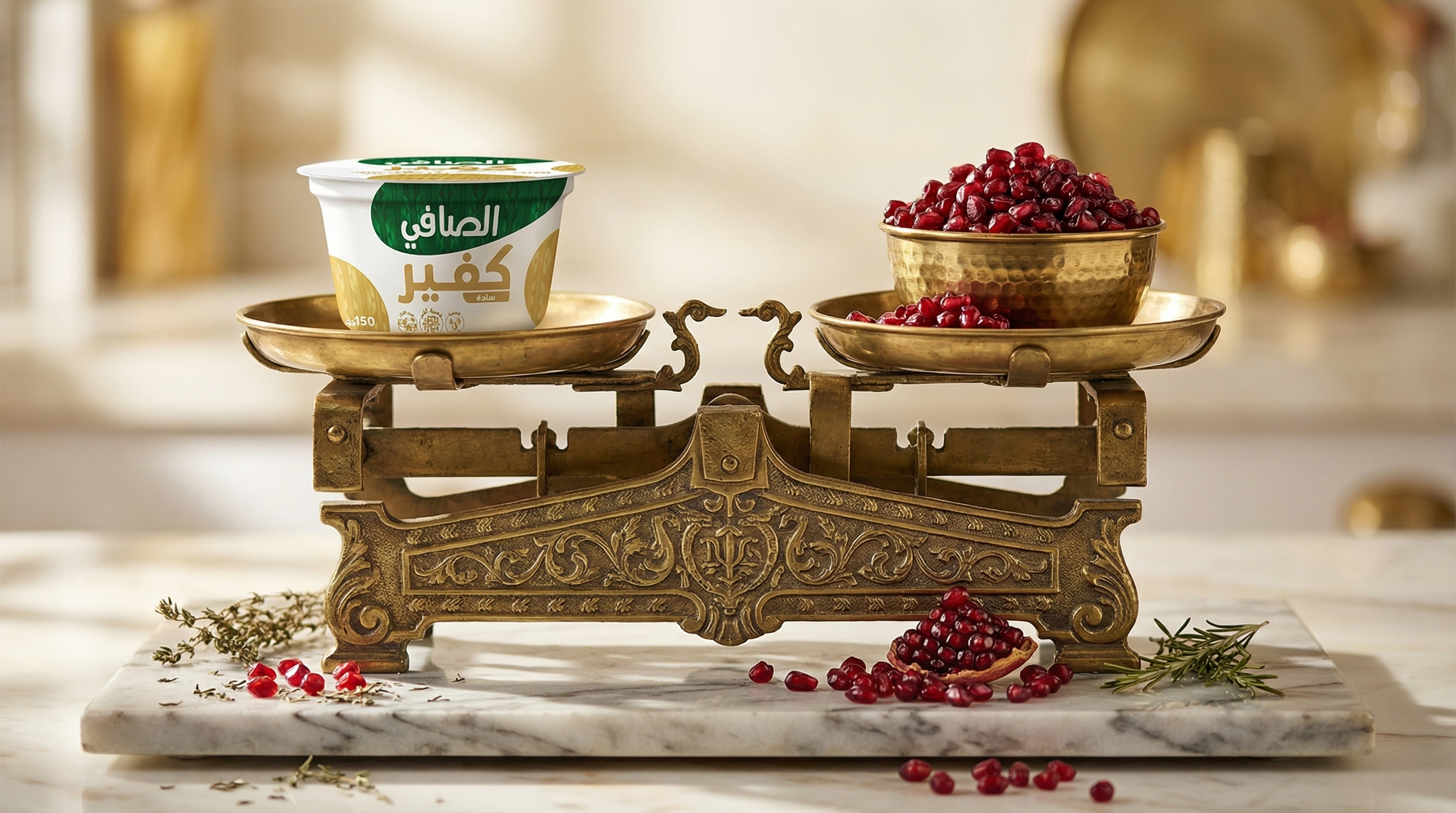
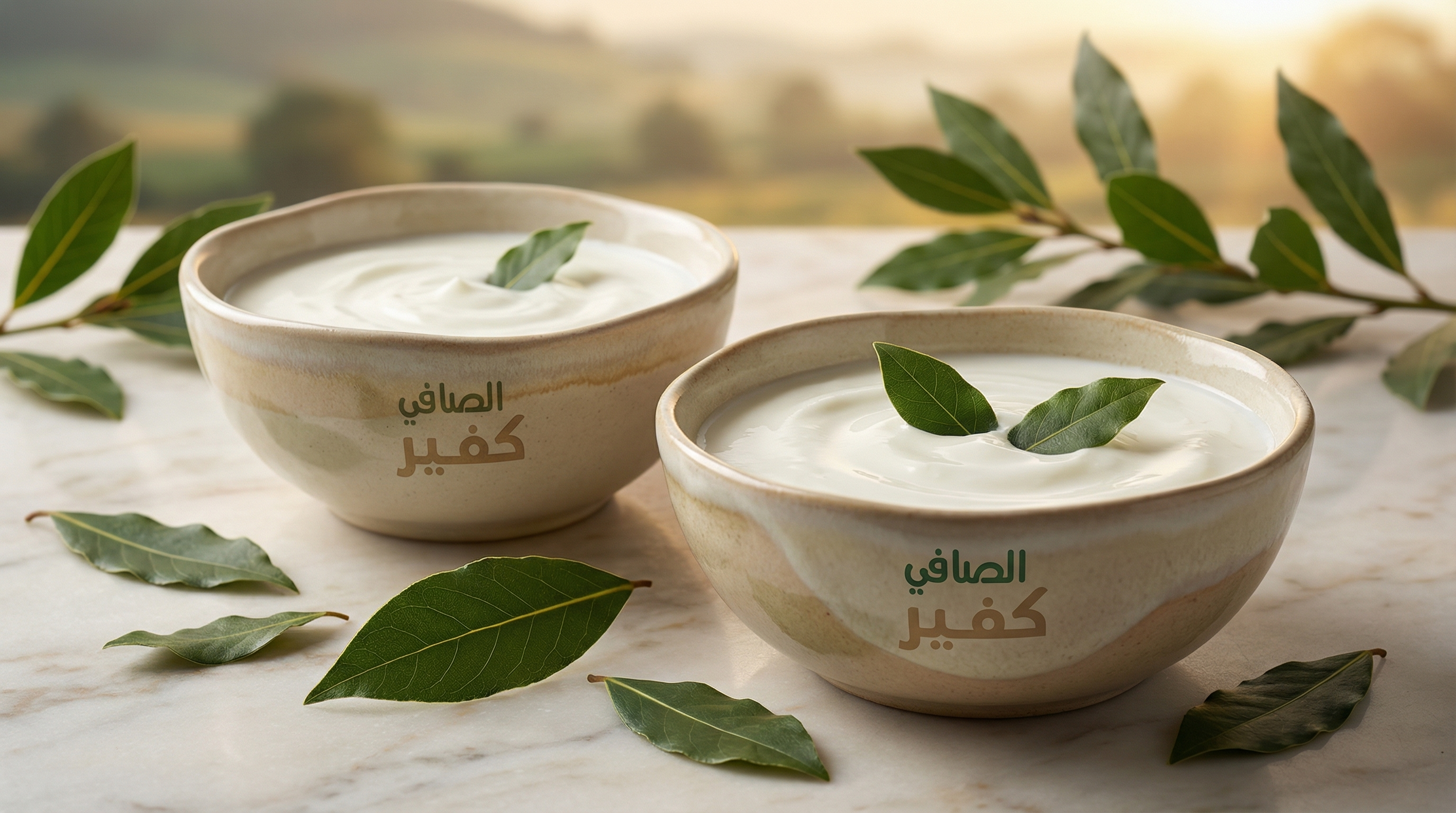
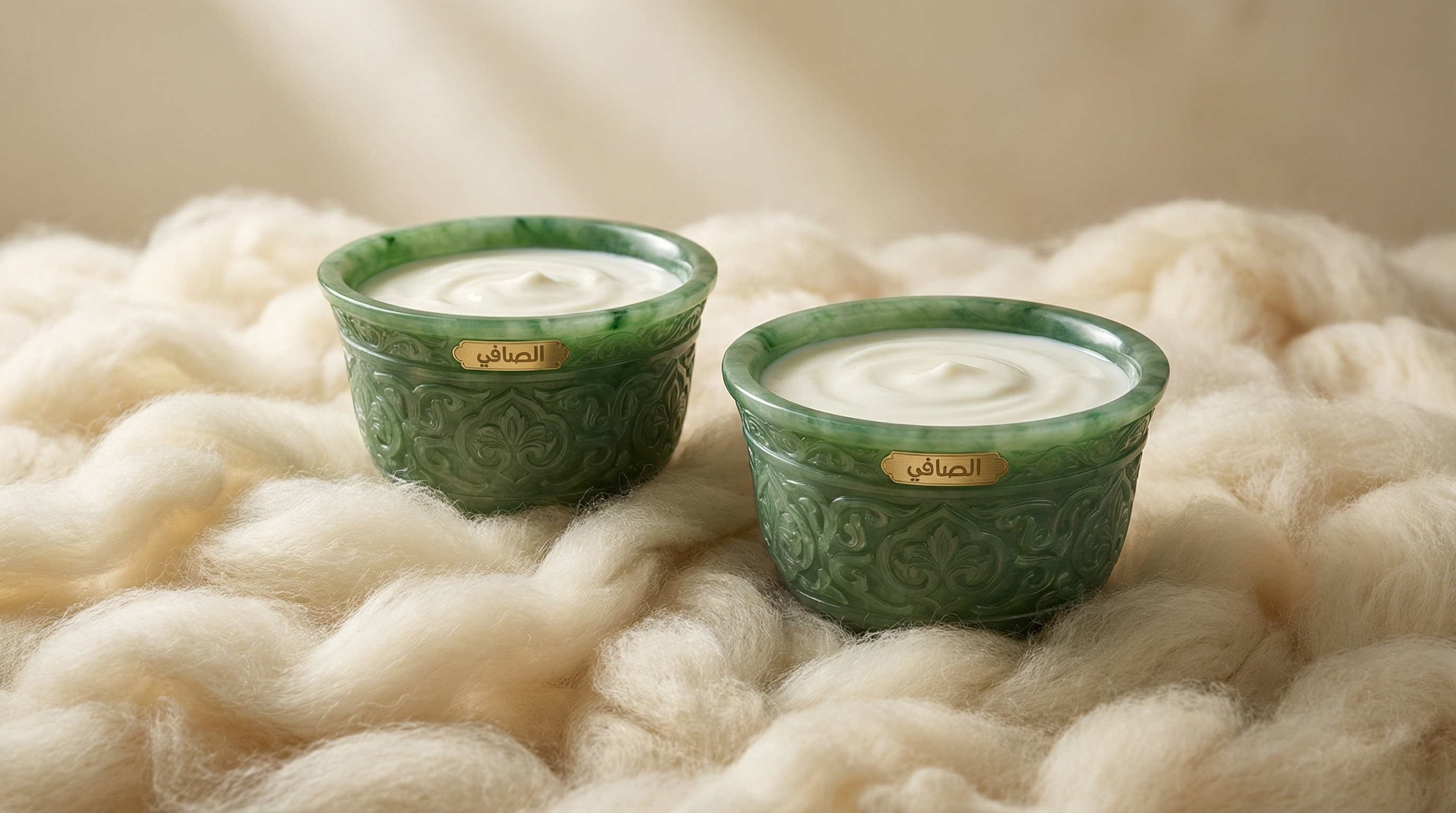
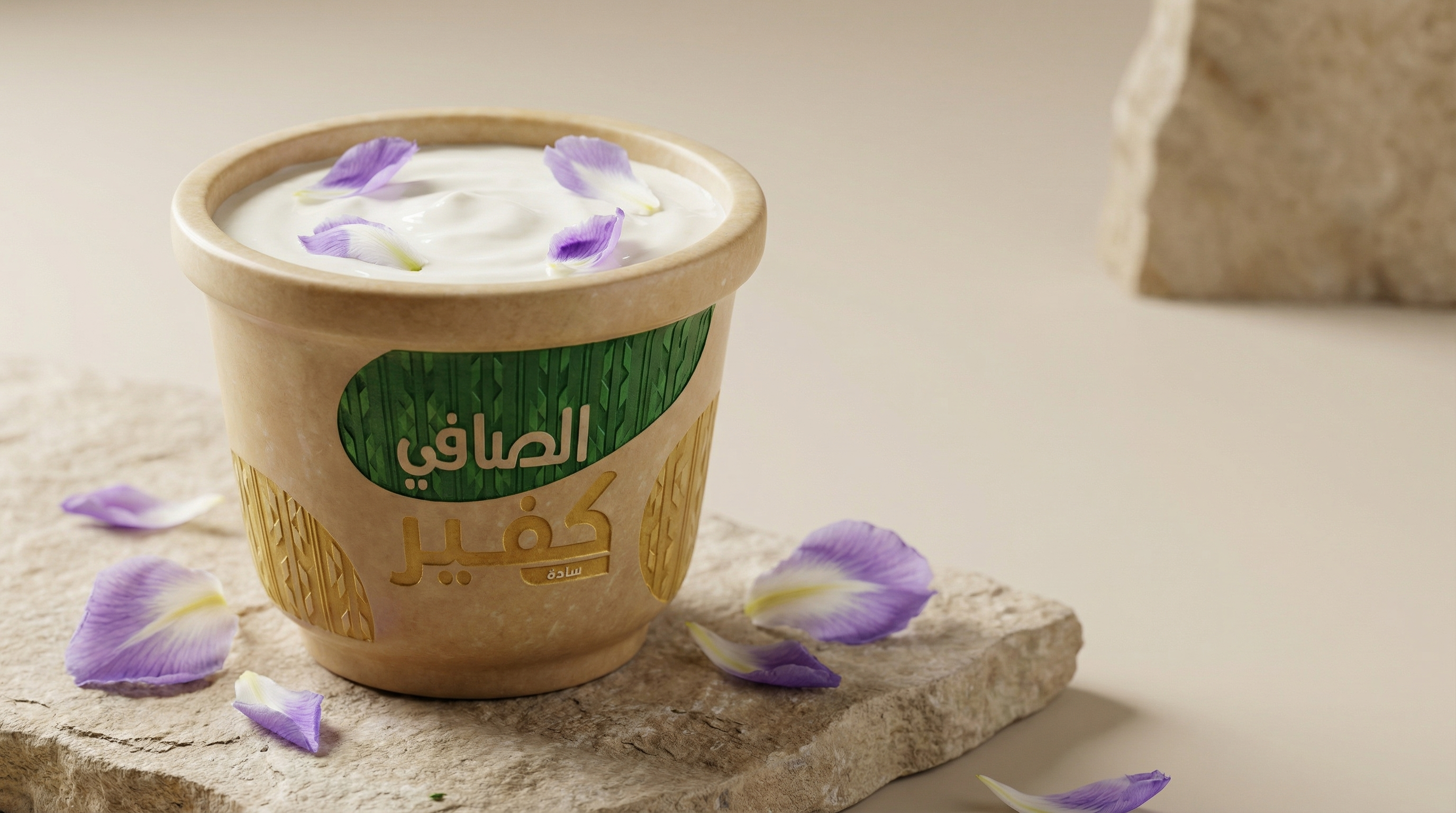
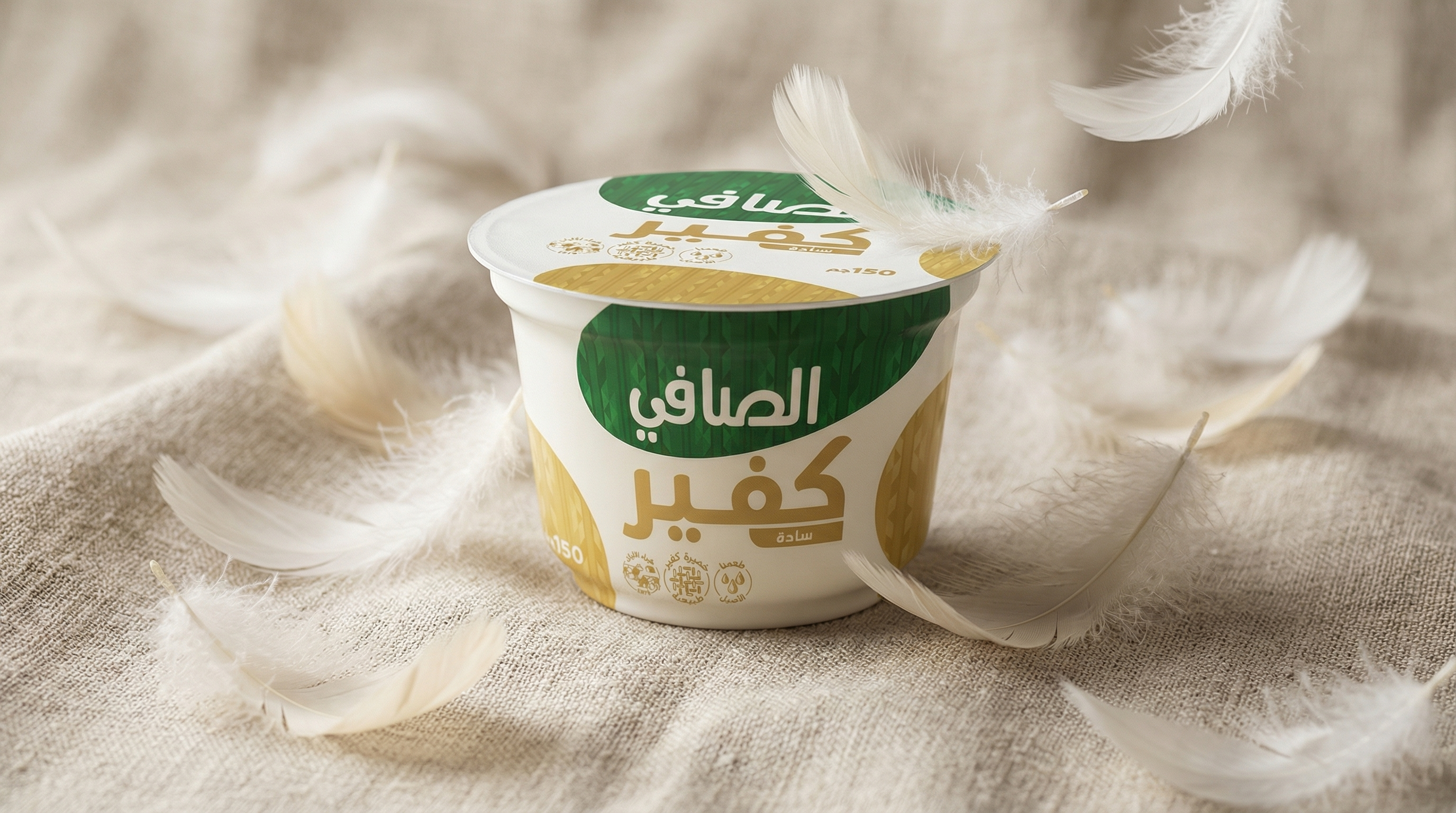
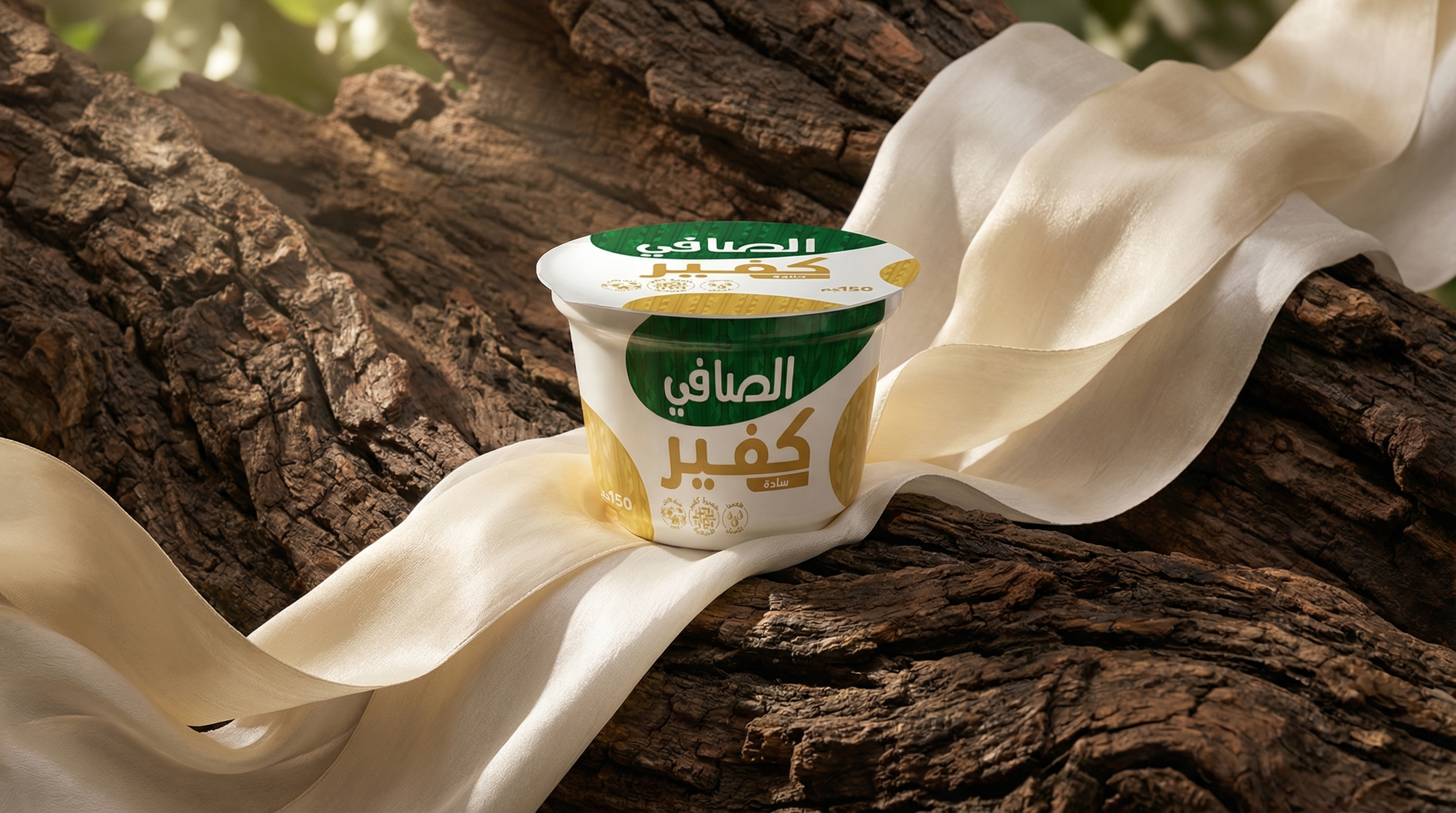
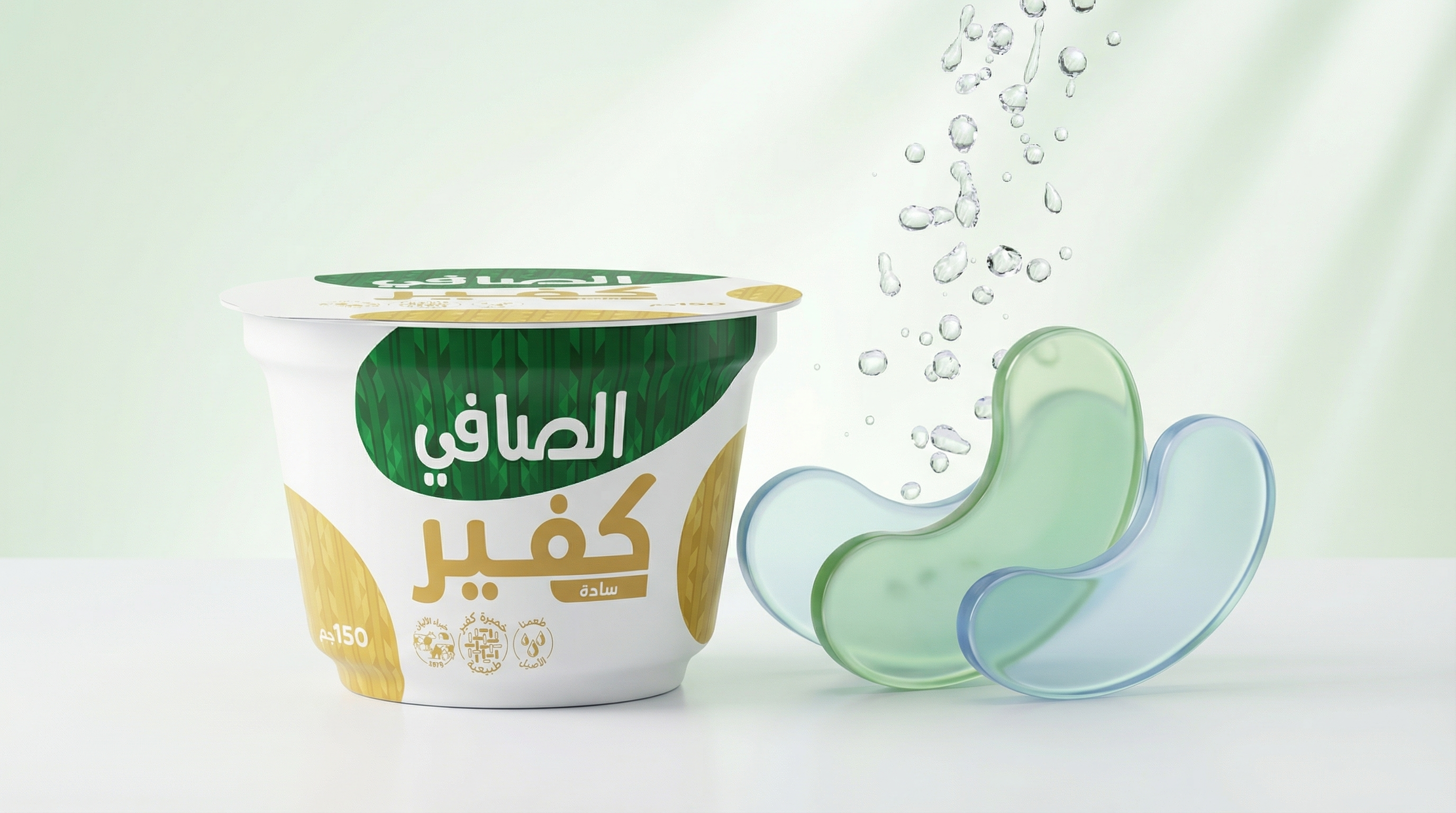
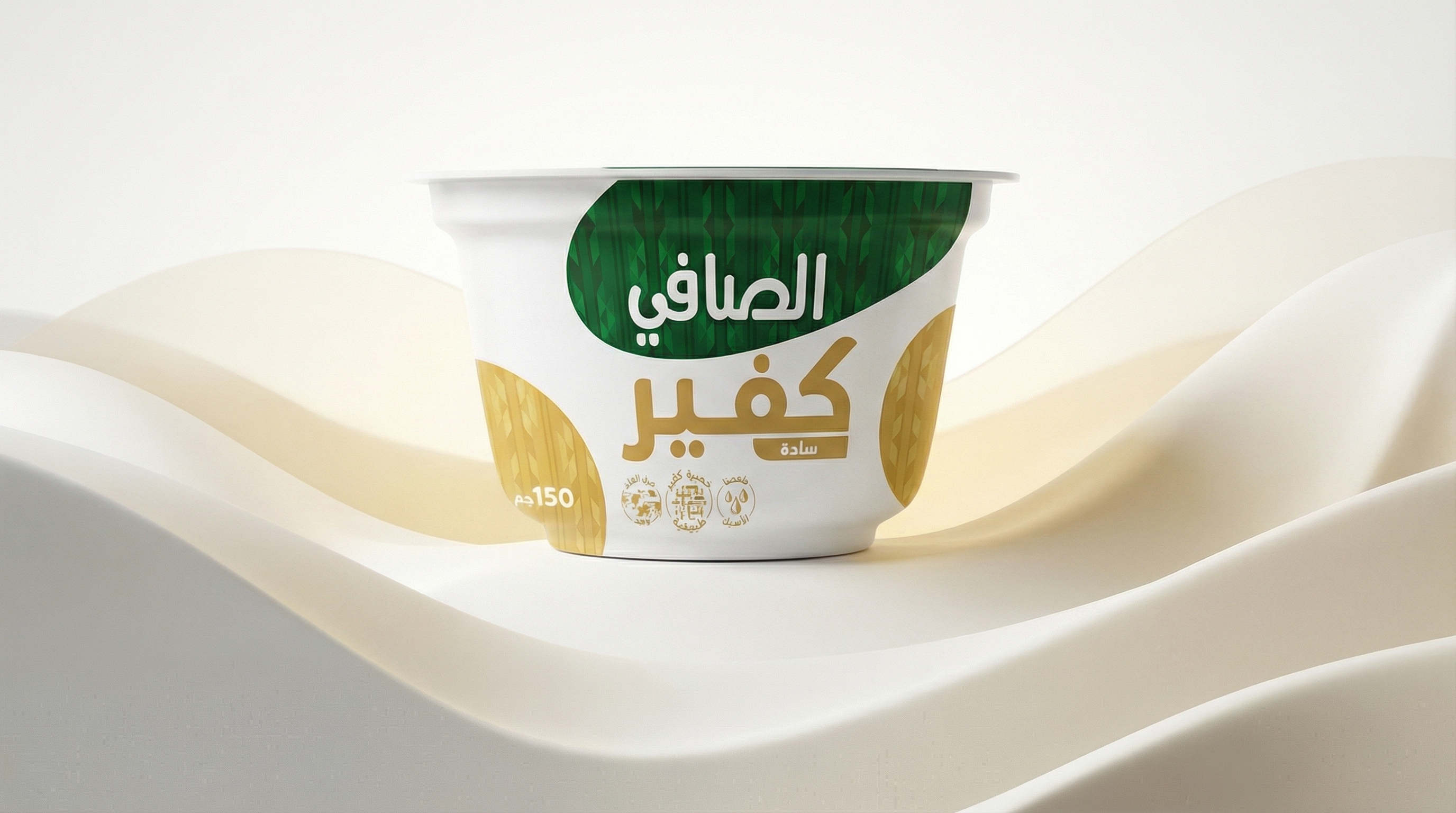
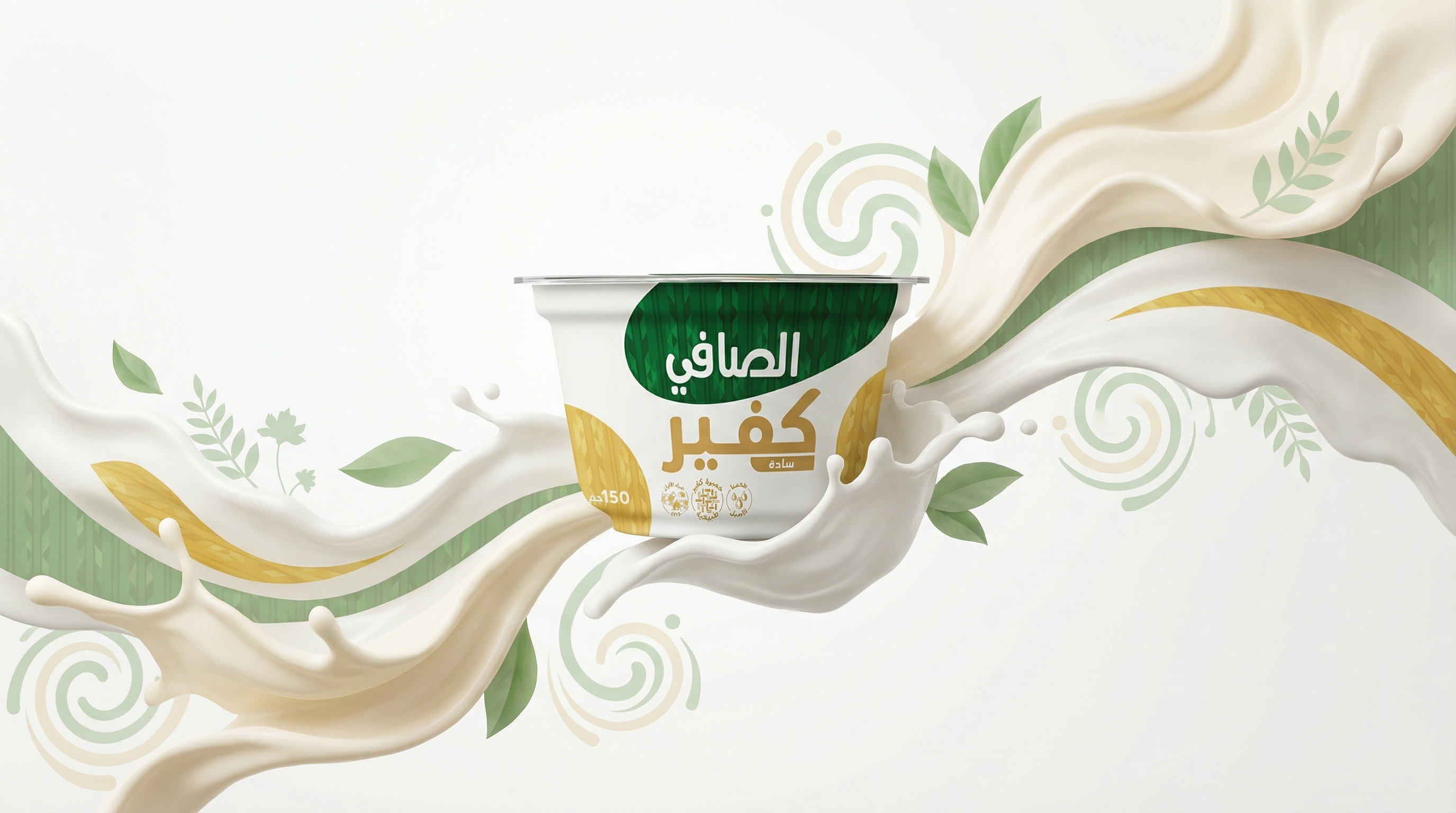
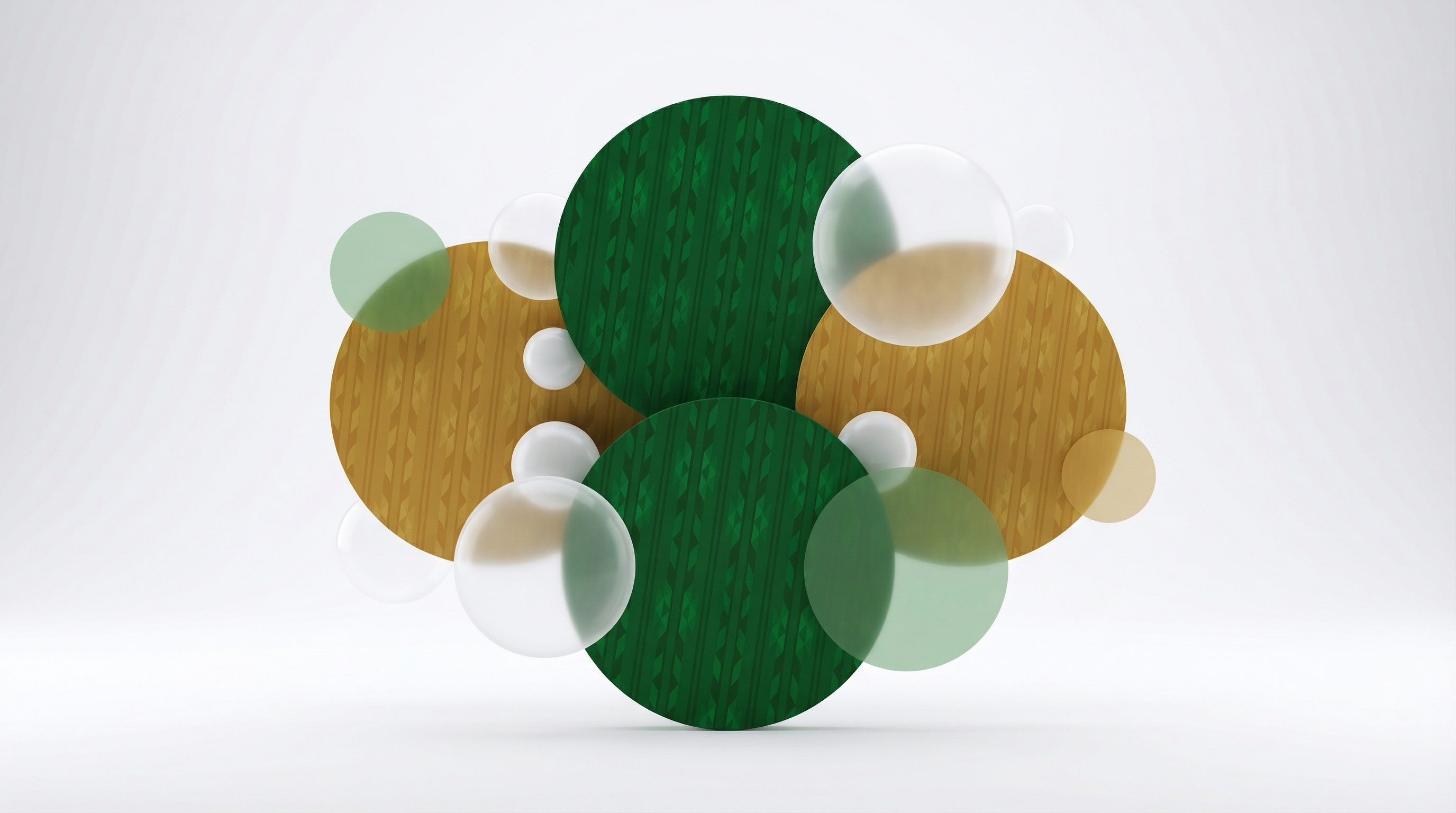
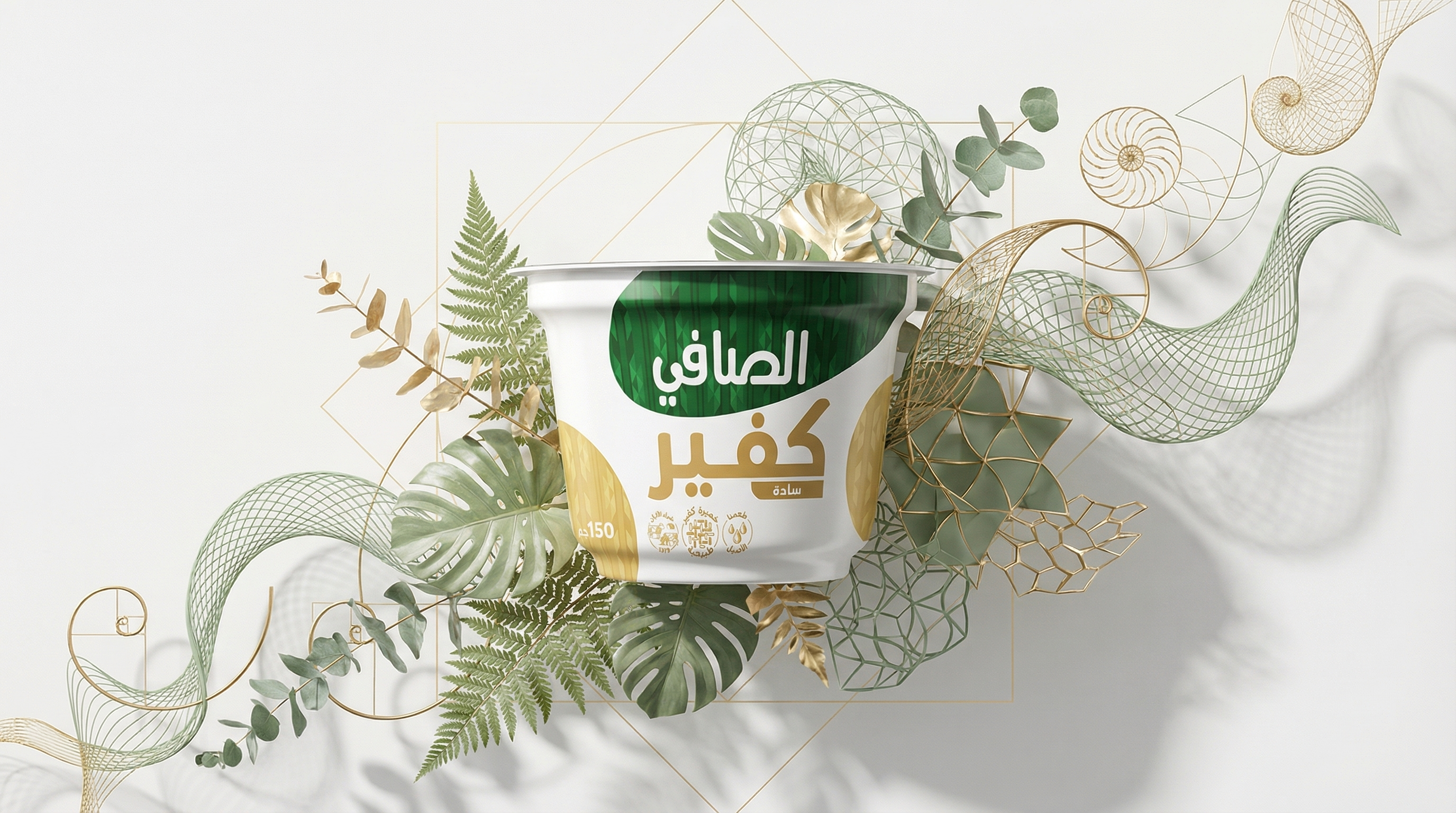
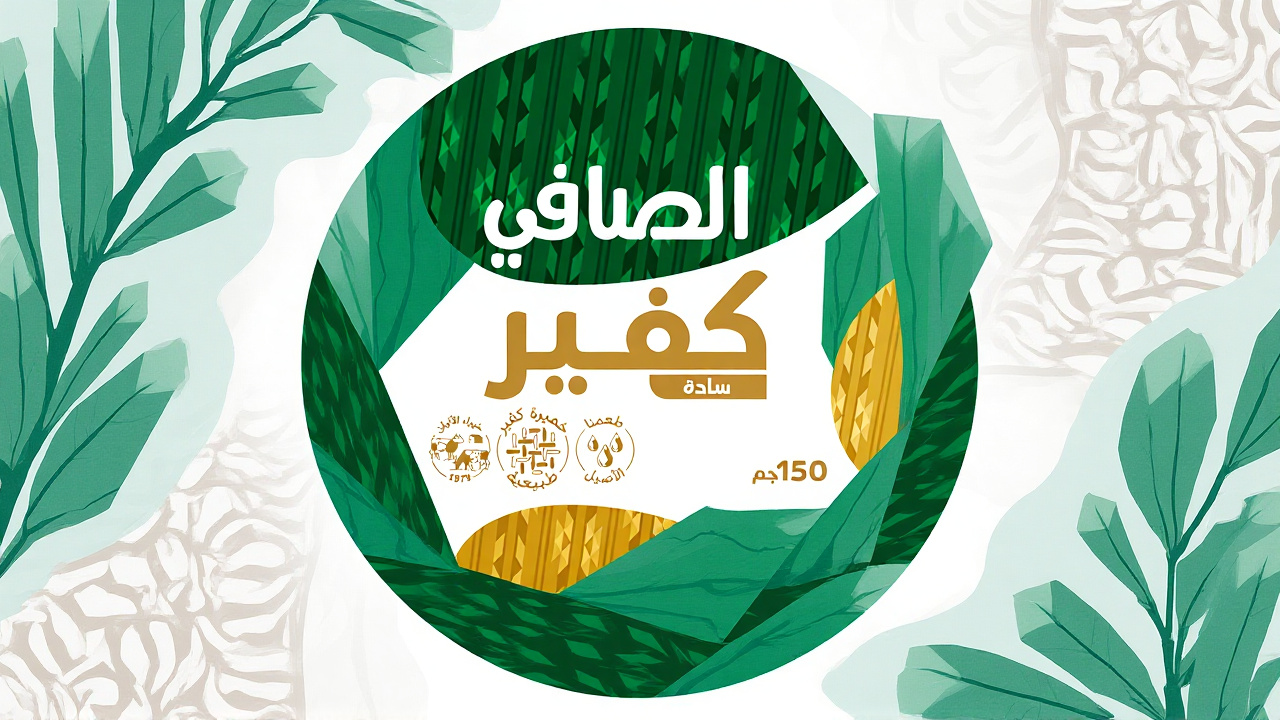
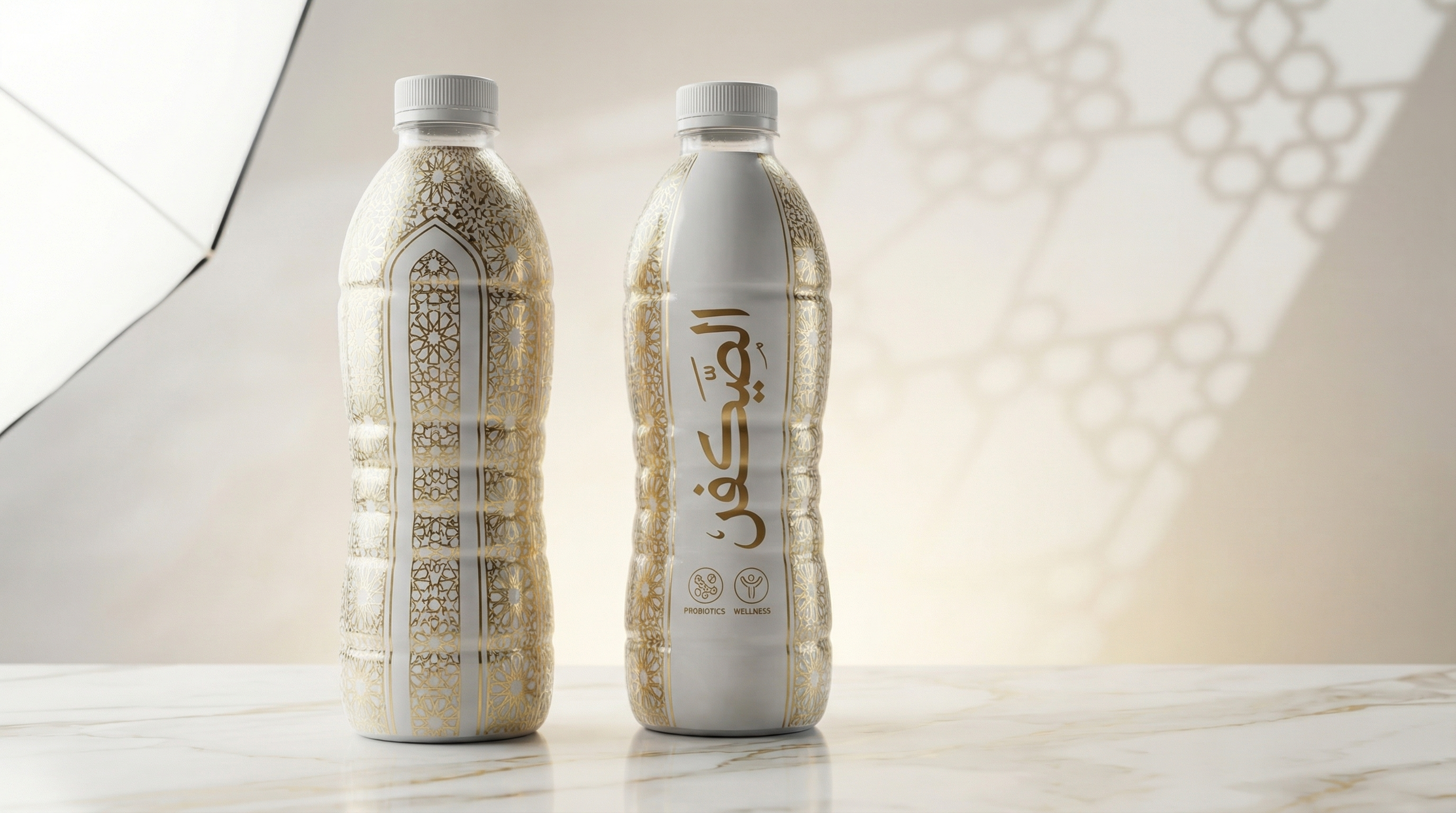
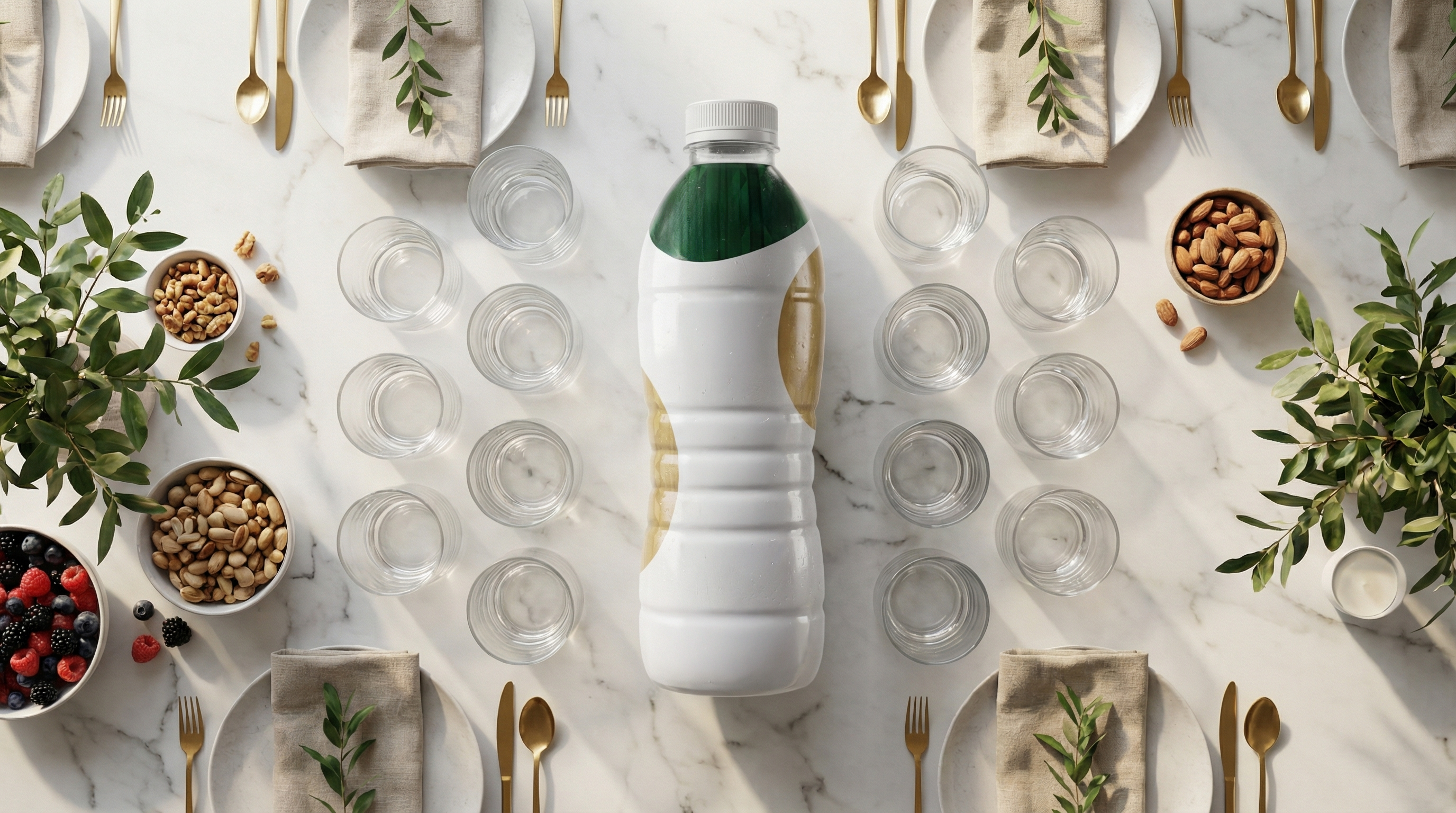
Before a single finished frame, we flood the space with directions. The images in this case study are studies, concept art and preparation, not the final deliverable. They are how we argue. We generated dozens of worlds for the bottle to live in: woven into tulle, dissolved into wireframe, suspended in a field of mathematics, fractured through Islamic geometry. Each is a hypothesis about what kefir could mean.
None of these were the film. They were how we found it. Only once a direction earned its place did we commit it to motion. This is the opposite of prompt-and-pray: art direction with a generative engine as the brush. What follows is a fraction of the exploration that preceded a single word to the client.
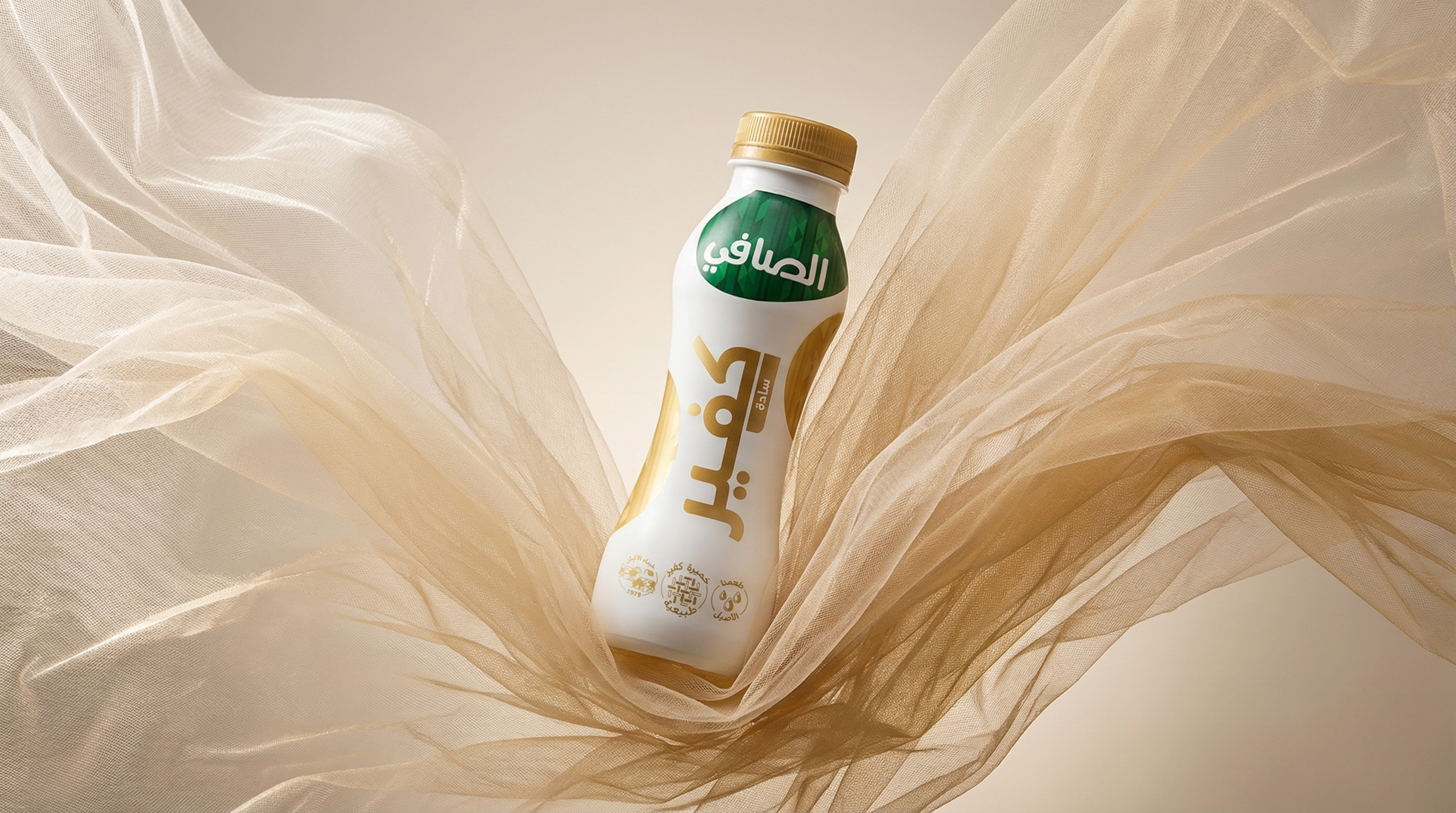
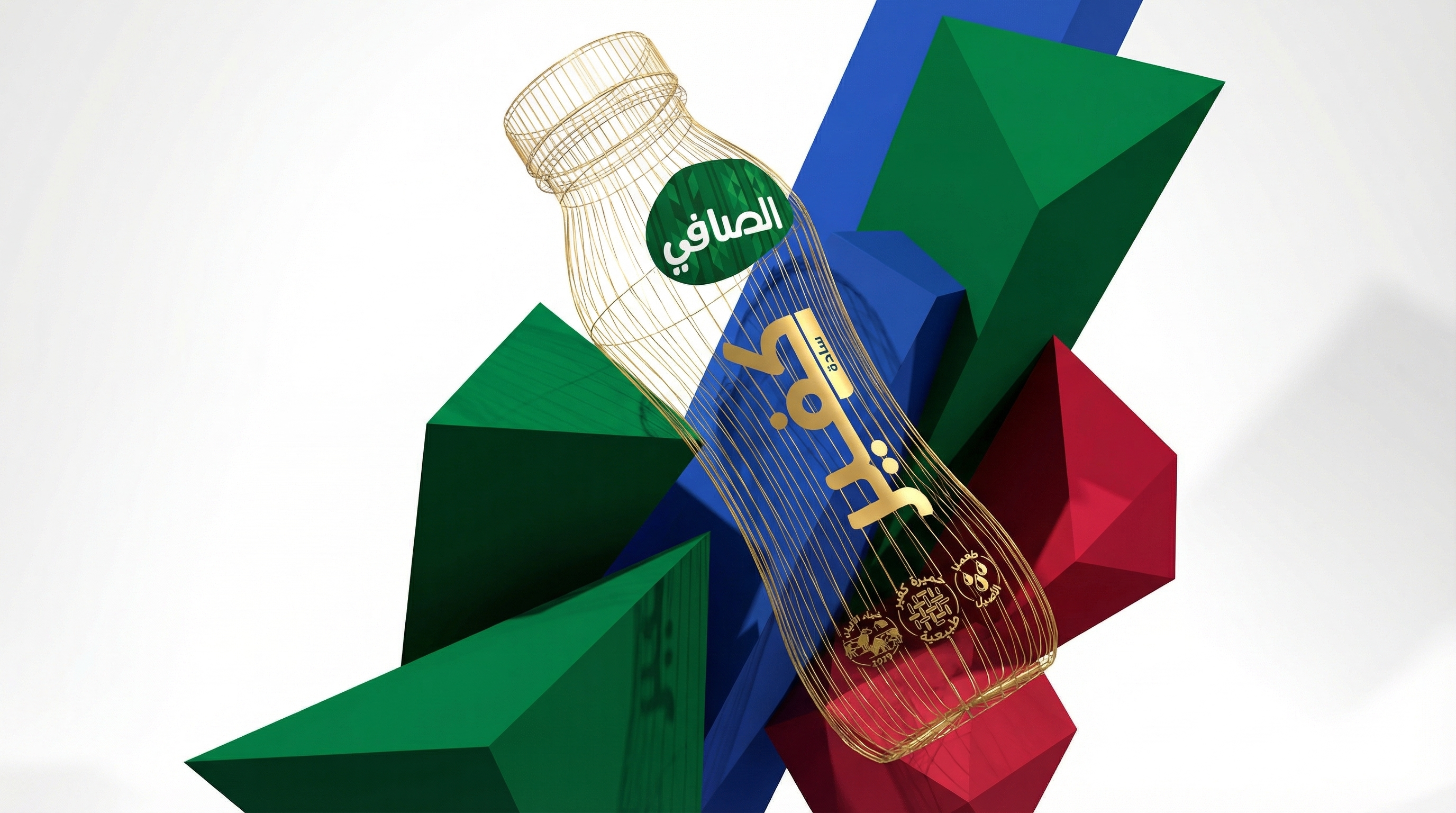
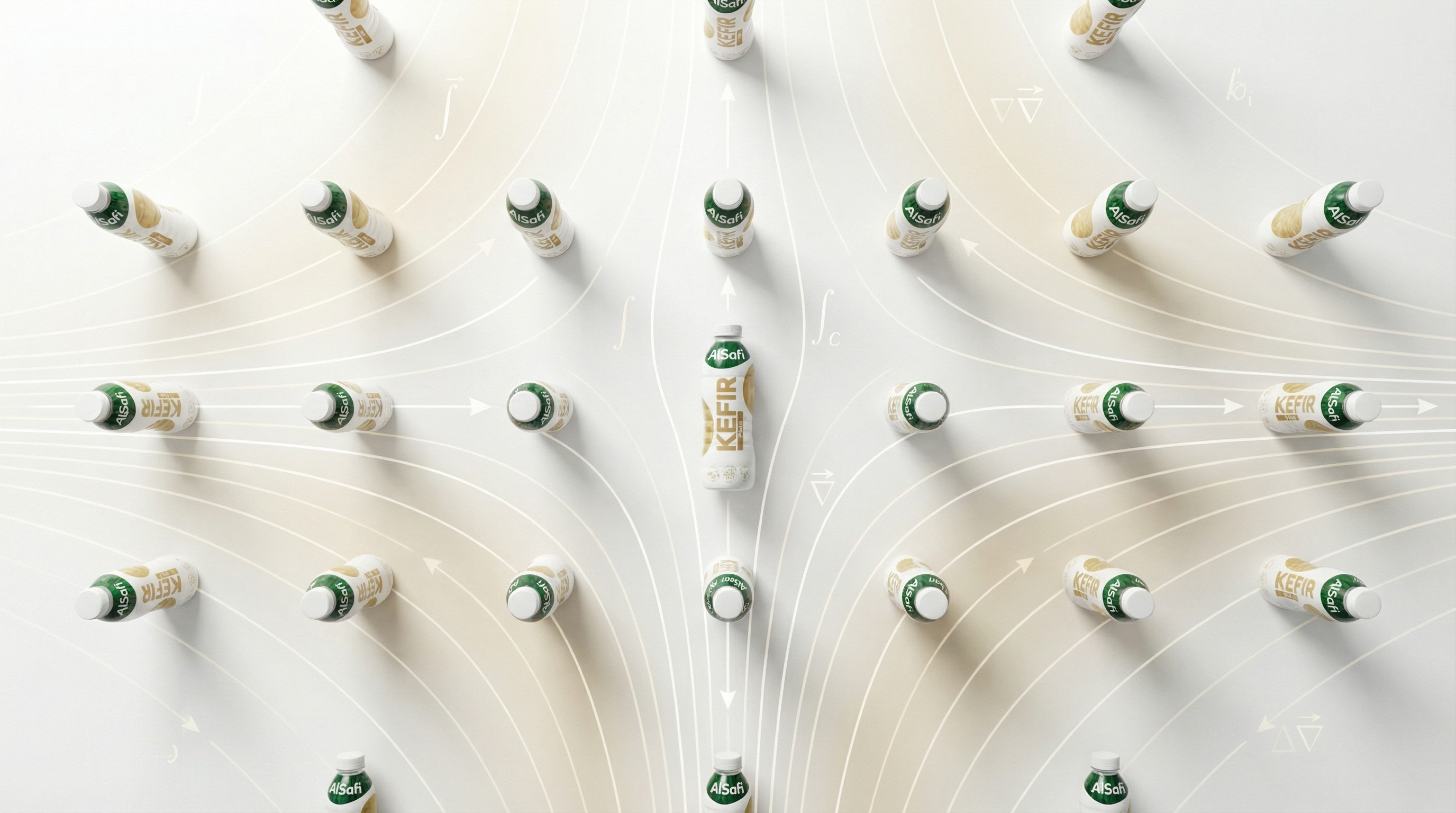
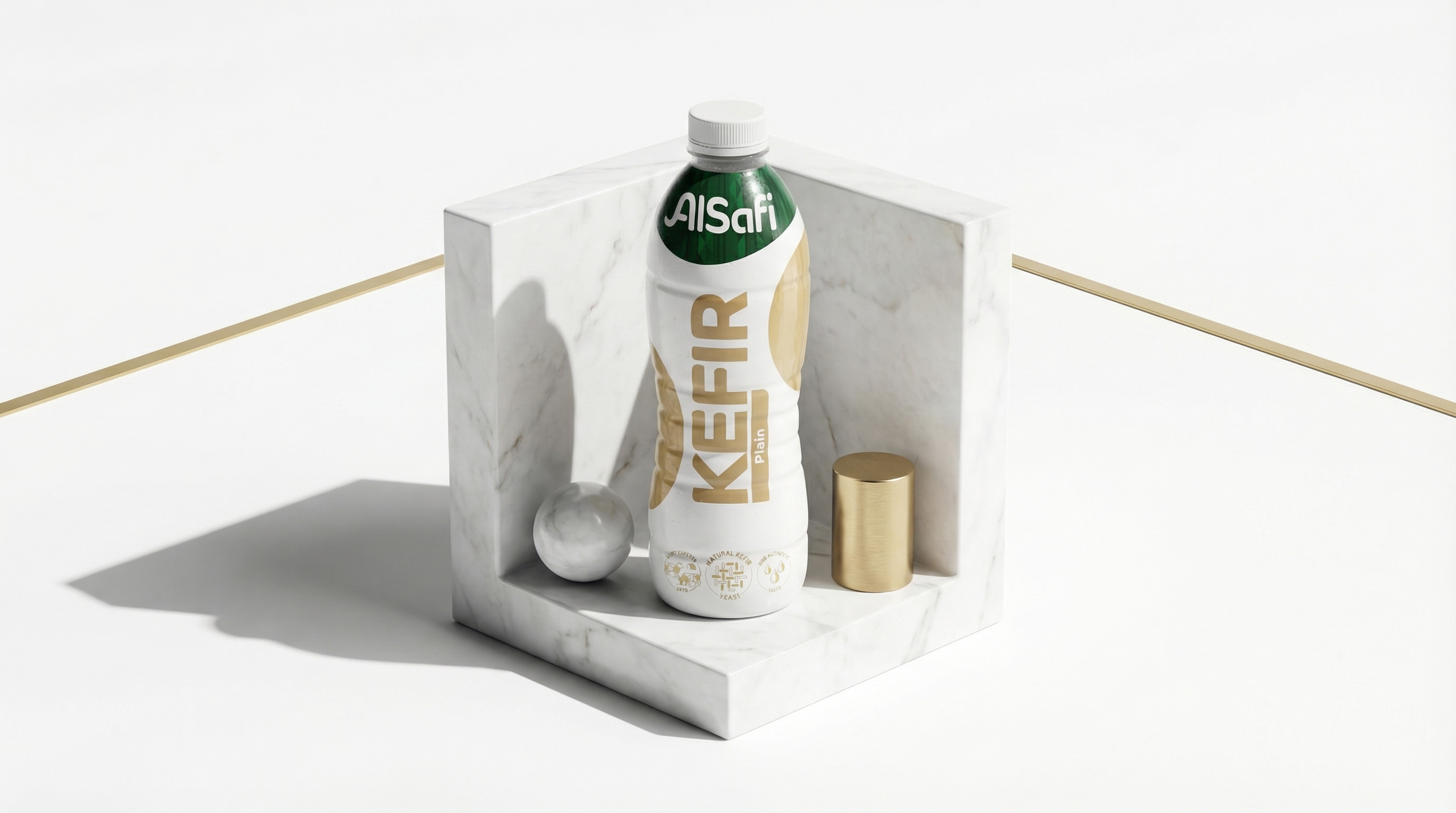
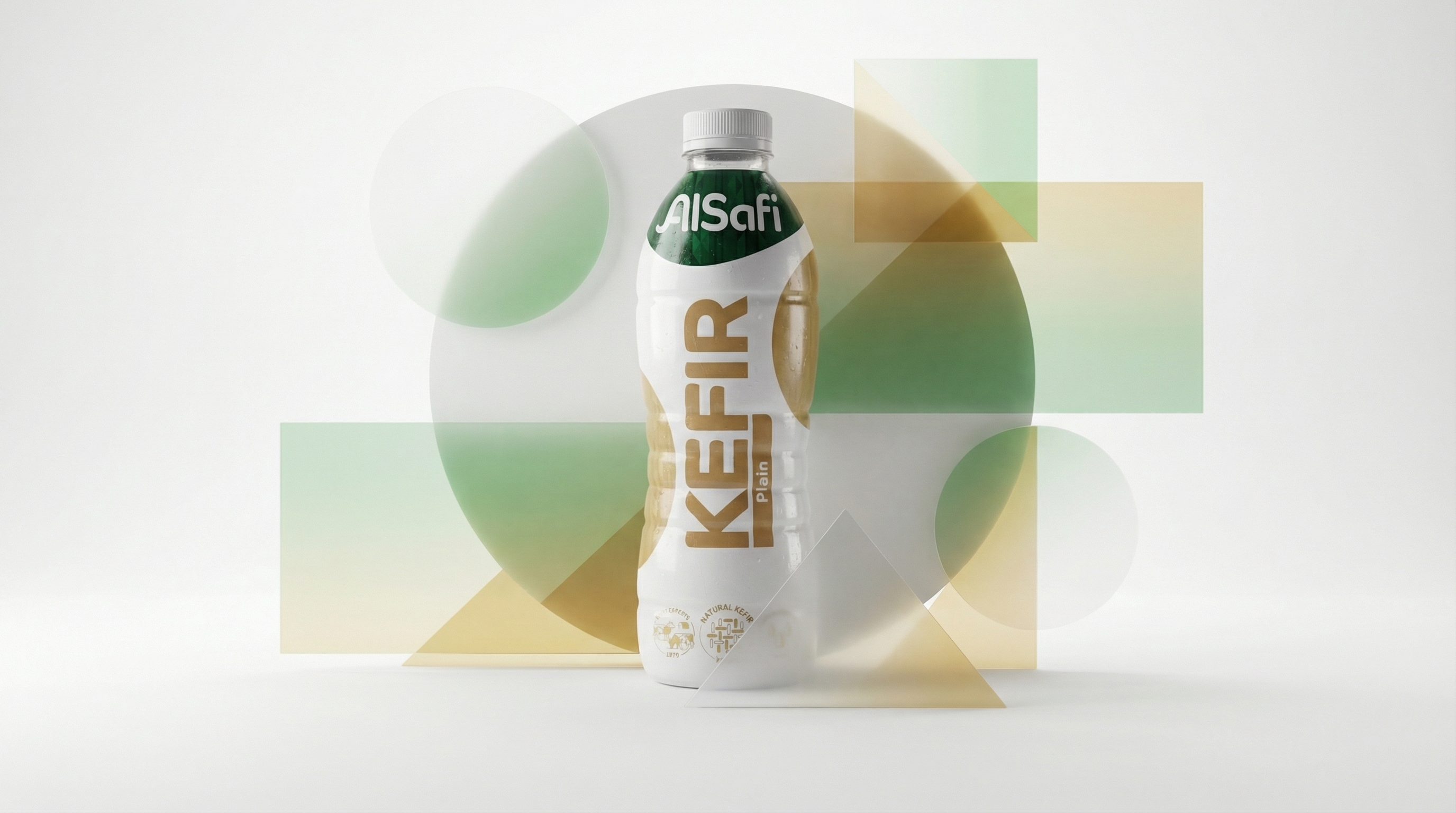
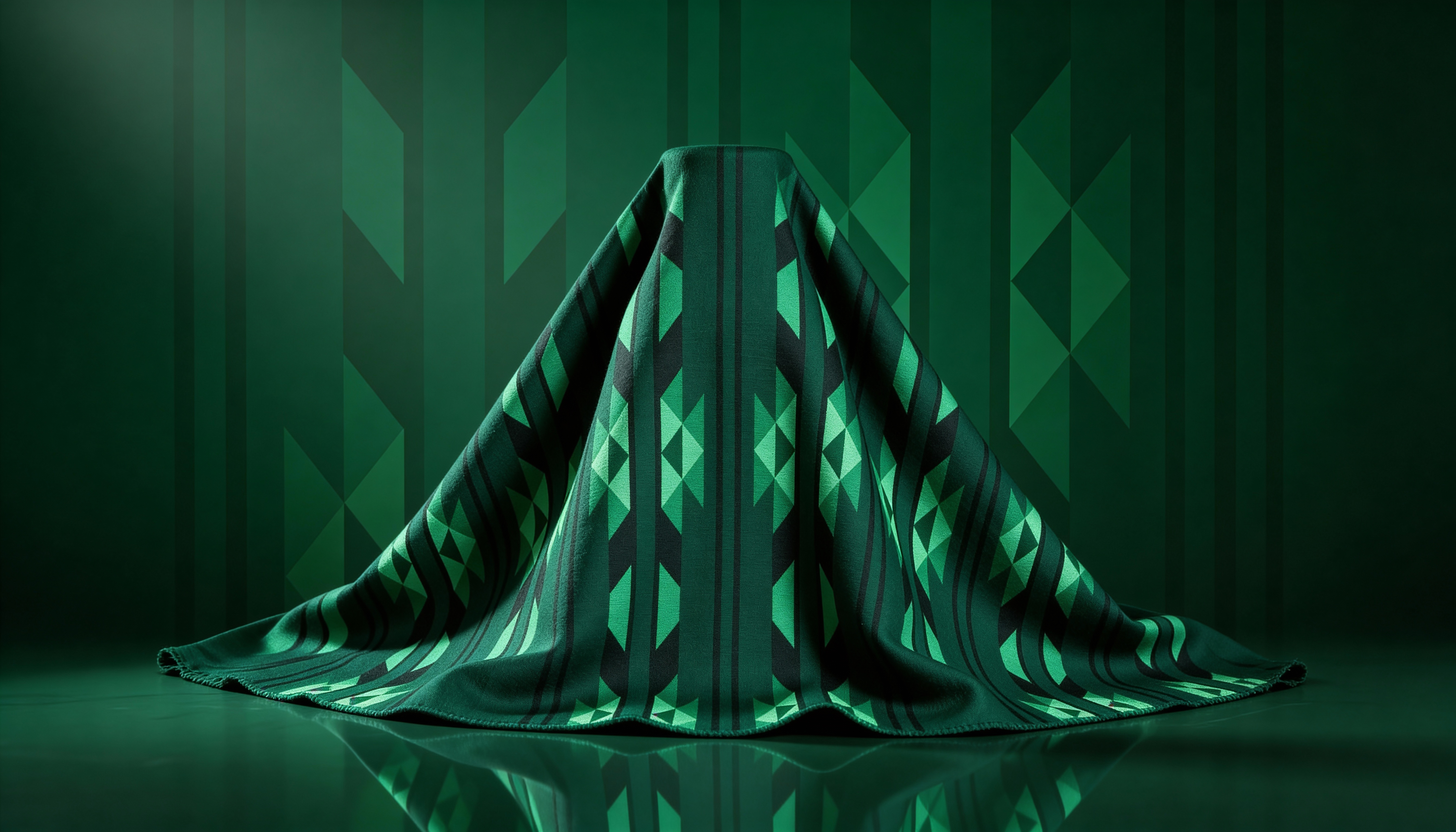
Concept studies, a selection from the look-development phase. Tulle, wireframe, field-theory, Islamic geometry, soft-glass transparency. Studies, not finals.
AI did not replace the art direction. It made the art direction faster than the brief could change.EINAI · Direction
Step inside the concept vault
No single tool gets you here
Here is the part most "AI campaigns" never show you, because for most of them it does not exist. A prompt box is not a pipeline. To hit a beauty-shot standard, a real SKU, a real wordmark, a real surface, frame after frame, you need a production system: trained components, hard conditioning, and a finishing stage that treats the model output as a plate, not a final.
What follows is the actual graph that ran the campaign, and the five engineering problems we had to solve to make it hold. None of this is decoration. It is the difference between a pretty frame and a film a heritage brand can put its name on.
Every frame, end to end
Read it left to right. We train identity-locked components, drive a conditioned generation, resolve detail, then rebuild and stabilise the result in Nuke before it ever becomes a master. A node graph, because that is literally how it was built.
- Brand lock — SKU · wordmark · sadu · palette
- LoRA, product — identity-locked bottle
- LoRA, wordmark — Arabic الصافي · كفير
- Embedding, sadu — motif as a token
- Conditioned diffusion — depth + edge + seed-lock
- Tiled refine — ×4 · detail recovery
- Key / despill — plate isolation
- Project3D label — real artwork onto geo
- Deflicker · Kronos — temporal stability
- Grade · ACEScg — scene-linear
- Deliver — EXR → ProRes 4444 · H.265
We taught models the product, not the prompt
A base diffusion model is a generalist. Ask one for "Al-Safi kefir bottle" and it confidently invents nonsense: the silhouette drifts, the Arabic melts into pseudo-script, the green is the wrong green. For a real SKU that is fatal, a brand cannot ship a bottle that is almost itself. So we stopped asking and started teaching.
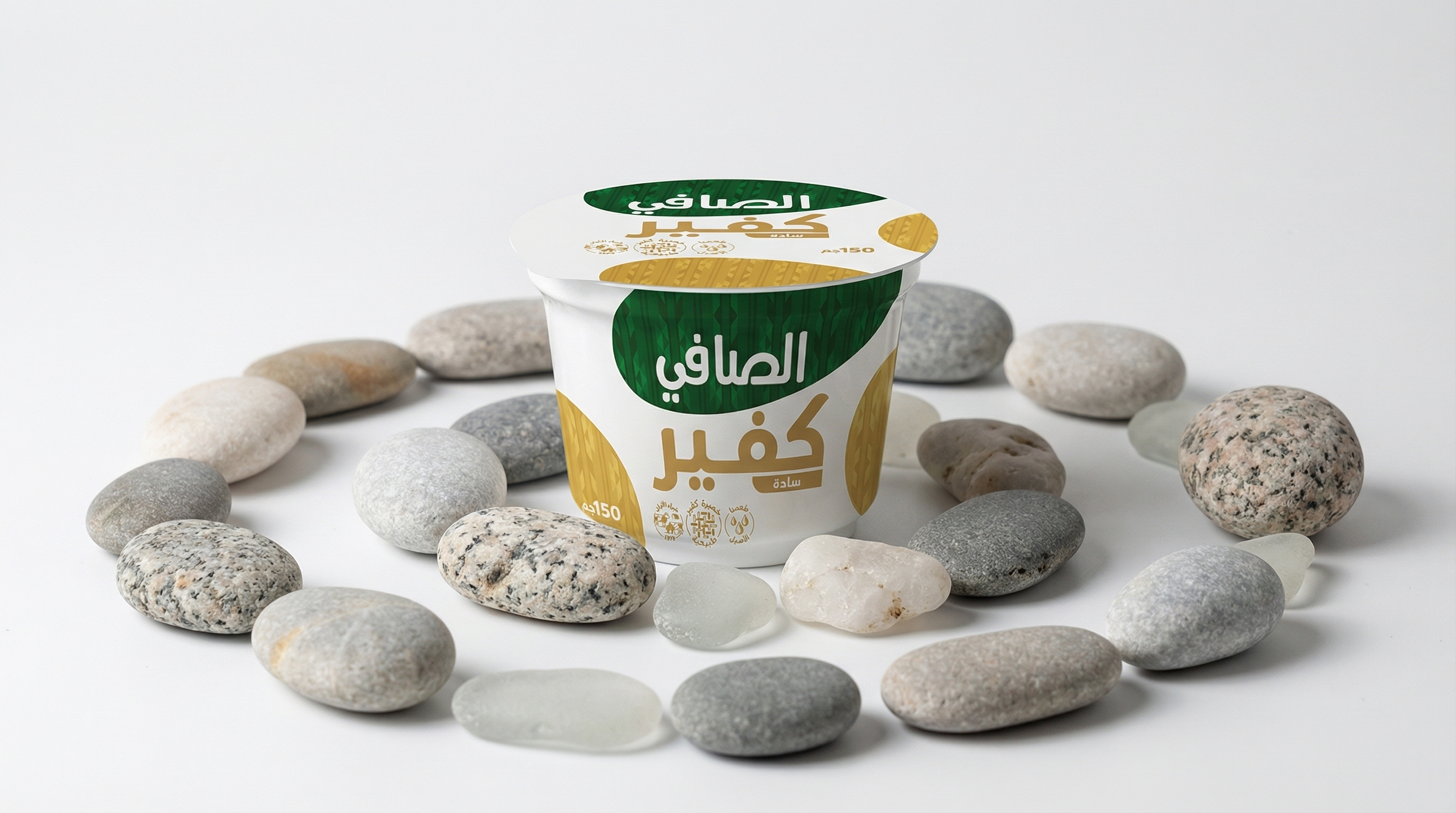
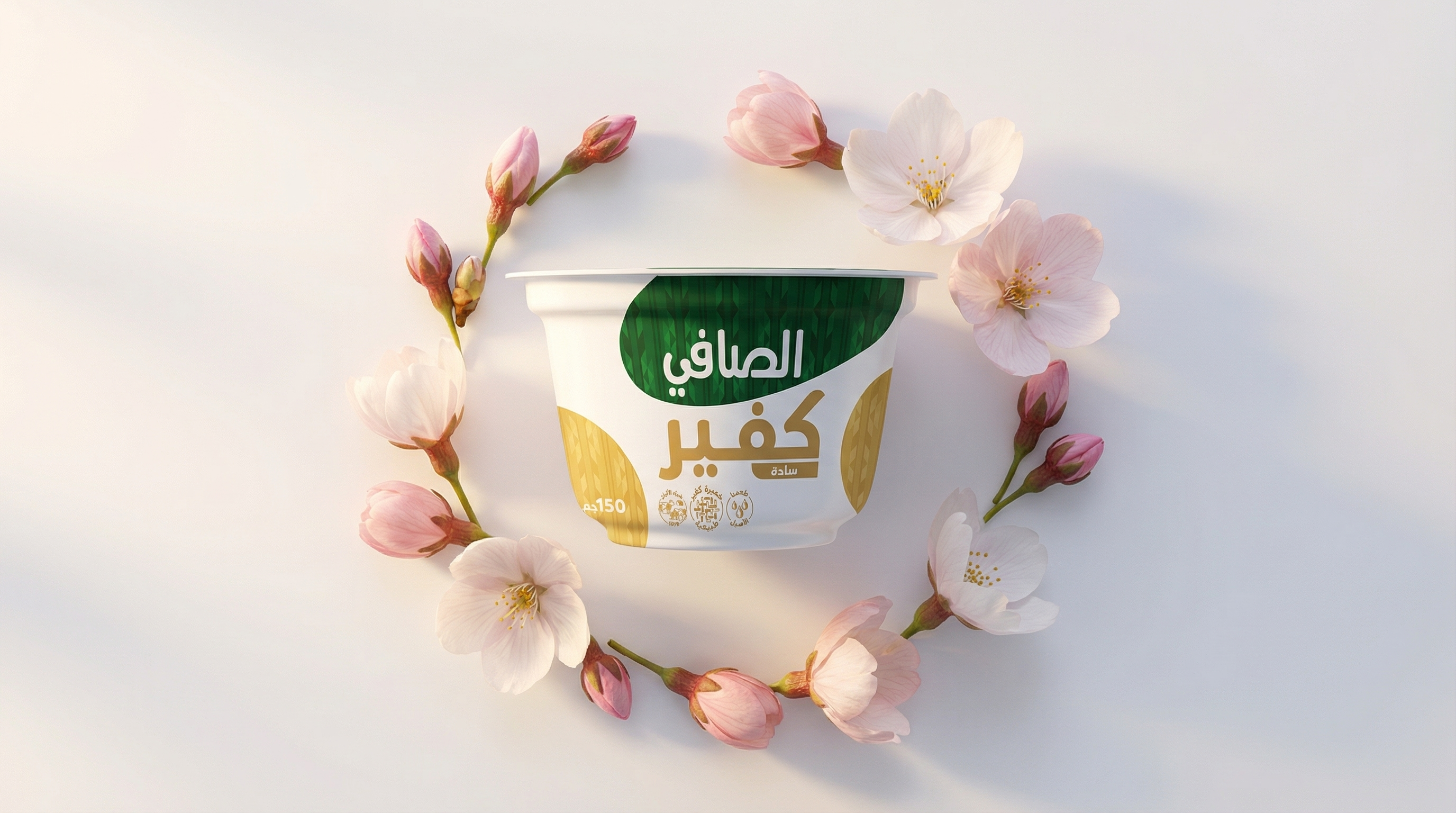
We fine-tune our own identity-locked adapters: a LoRA on the bottle’s exact geometry and label, a second LoRA on the Arabic wordmark, and a textual embedding for the sadu motif, each bound to a trigger token. The base model keeps its knowledge of light and material; our adapters inject the one thing it must never get wrong: this product. Curation is the real craft, a few dozen clean, correctly-lit references, balanced with regularisation images so the model learns the bottle without forgetting the world. The payoff: the same bottle, on brand, in any world we build.
Conditioning, not luck
A trained model still needs a director. We never free-run a prompt and hope. Every shot is conditioned: a depth pass fixes the bottle in space, a Canny edge map holds the silhouette, normal and pose passes govern how the cloth drapes and lifts. Seeds and schedulers are locked, so a look is reproducible on demand rather than a lottery you re-roll until it half-works.
Where the label still drifts, we do not repaint by prompt, we inpaint in latent space, masking only the panel and regenerating it, or hand it to compositing to replace outright. Region prompts keep gold gold and green green. This is the opposite of the slot machine: a hundred dials, each one accountable.
Every hero begins as geometry
Before light, before label, there is structure. A hero frame starts as a clean outline, becomes a dimensioned engineering draft, diameters, radii, wall thickness, then a true 3D mesh. That geometry is what gives us depth maps and normals to condition the generation, and what compositing later projects the real artwork onto. It is the invisible scaffold under every beautiful frame.
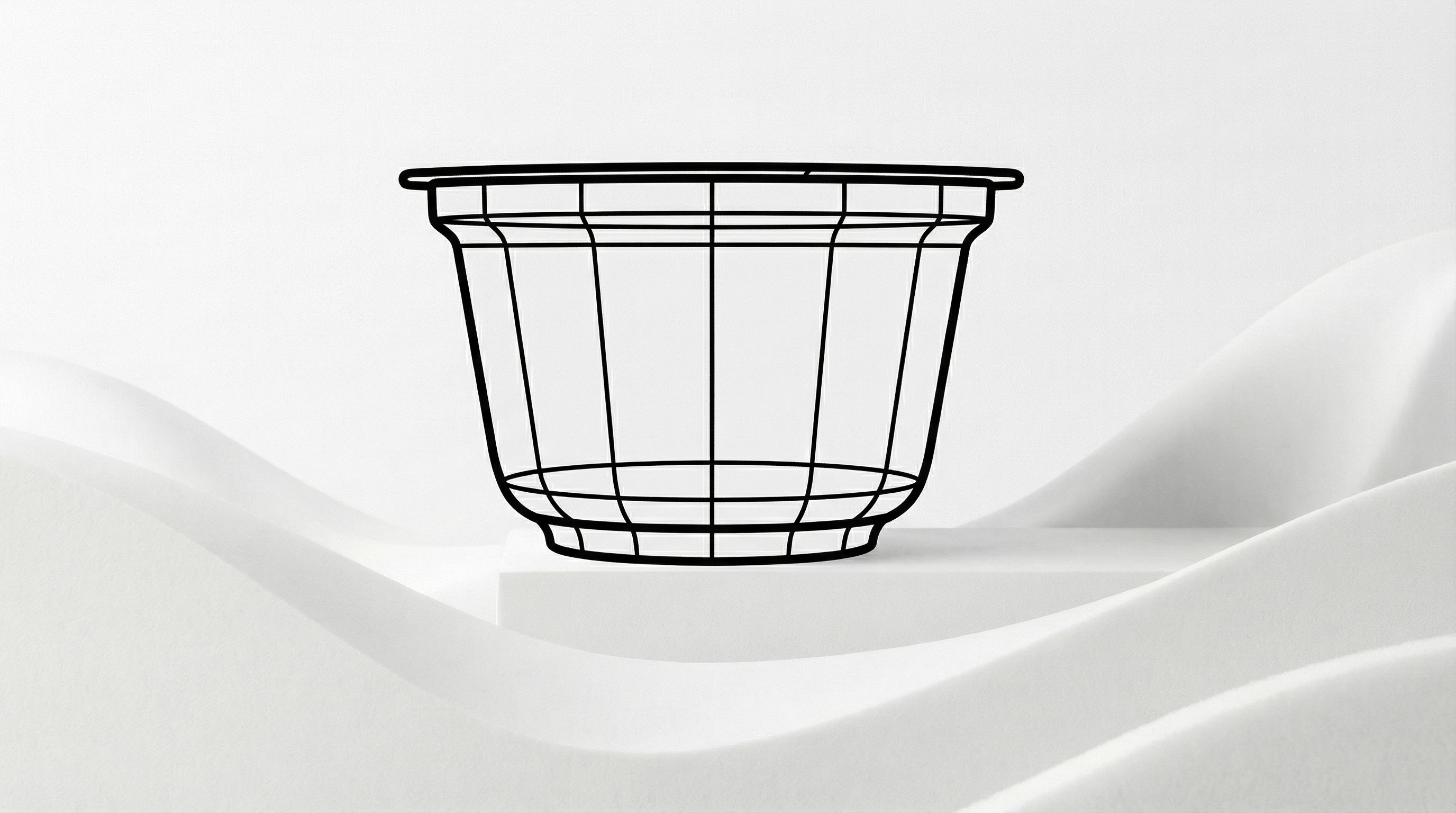
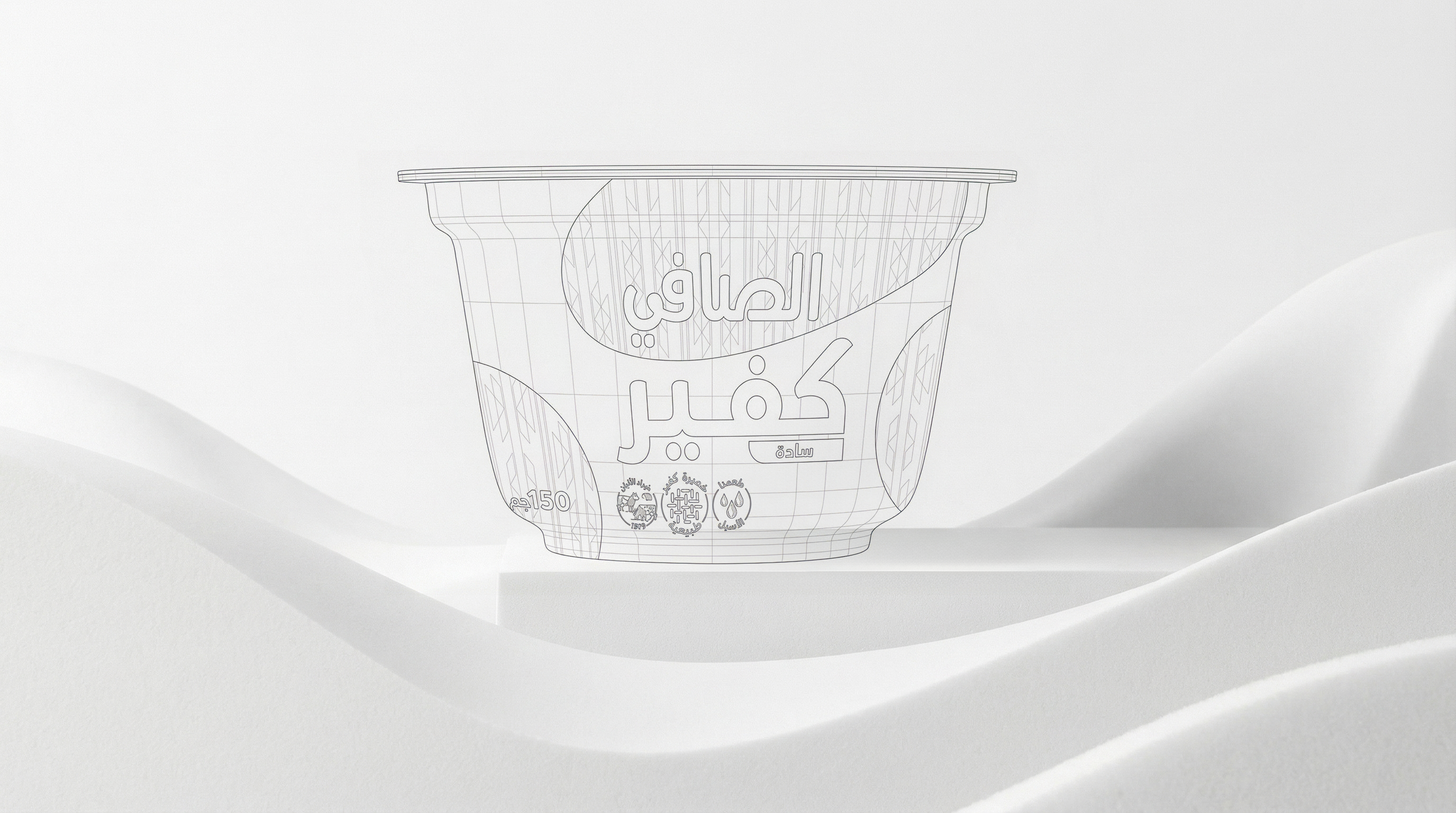
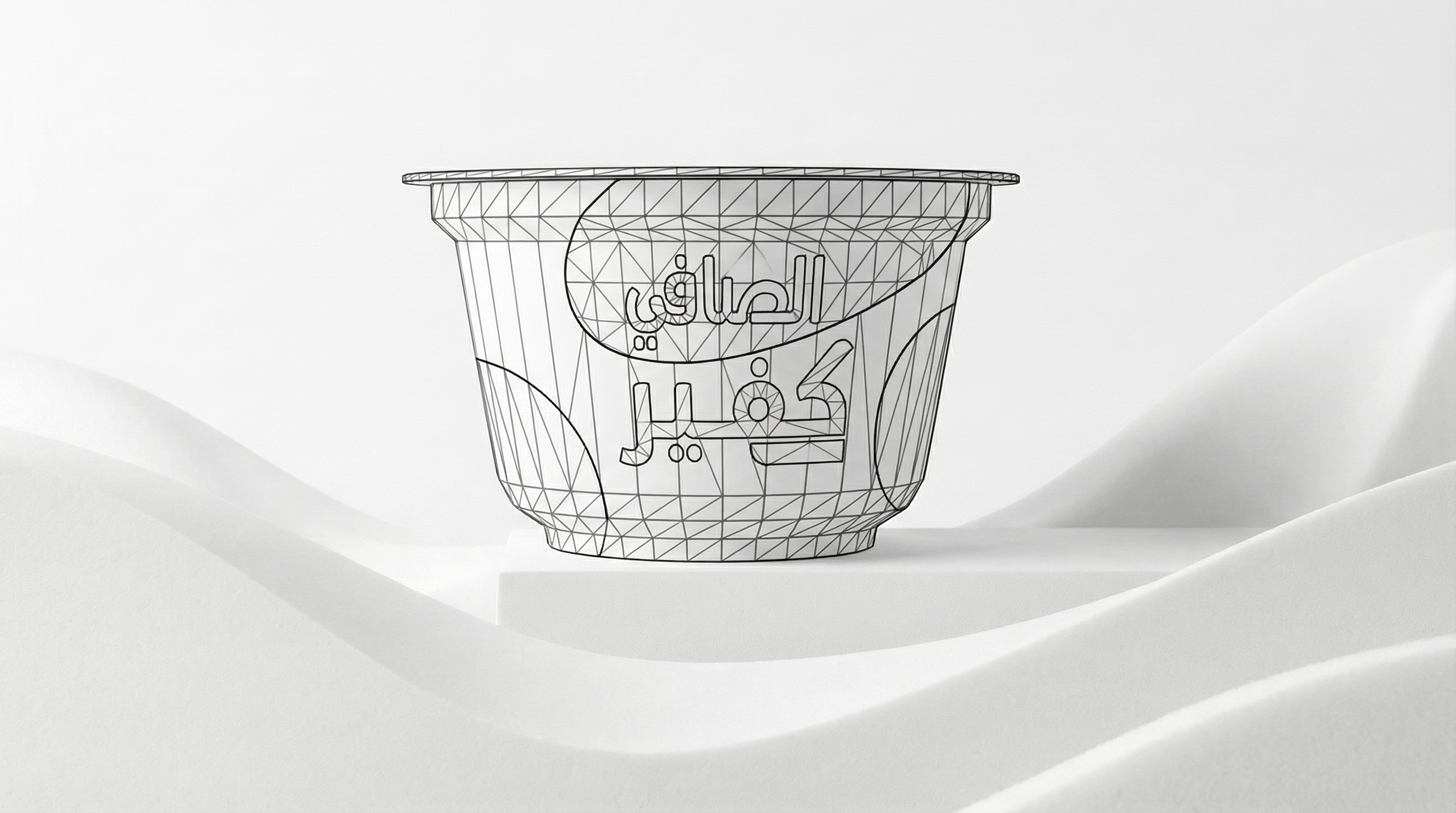
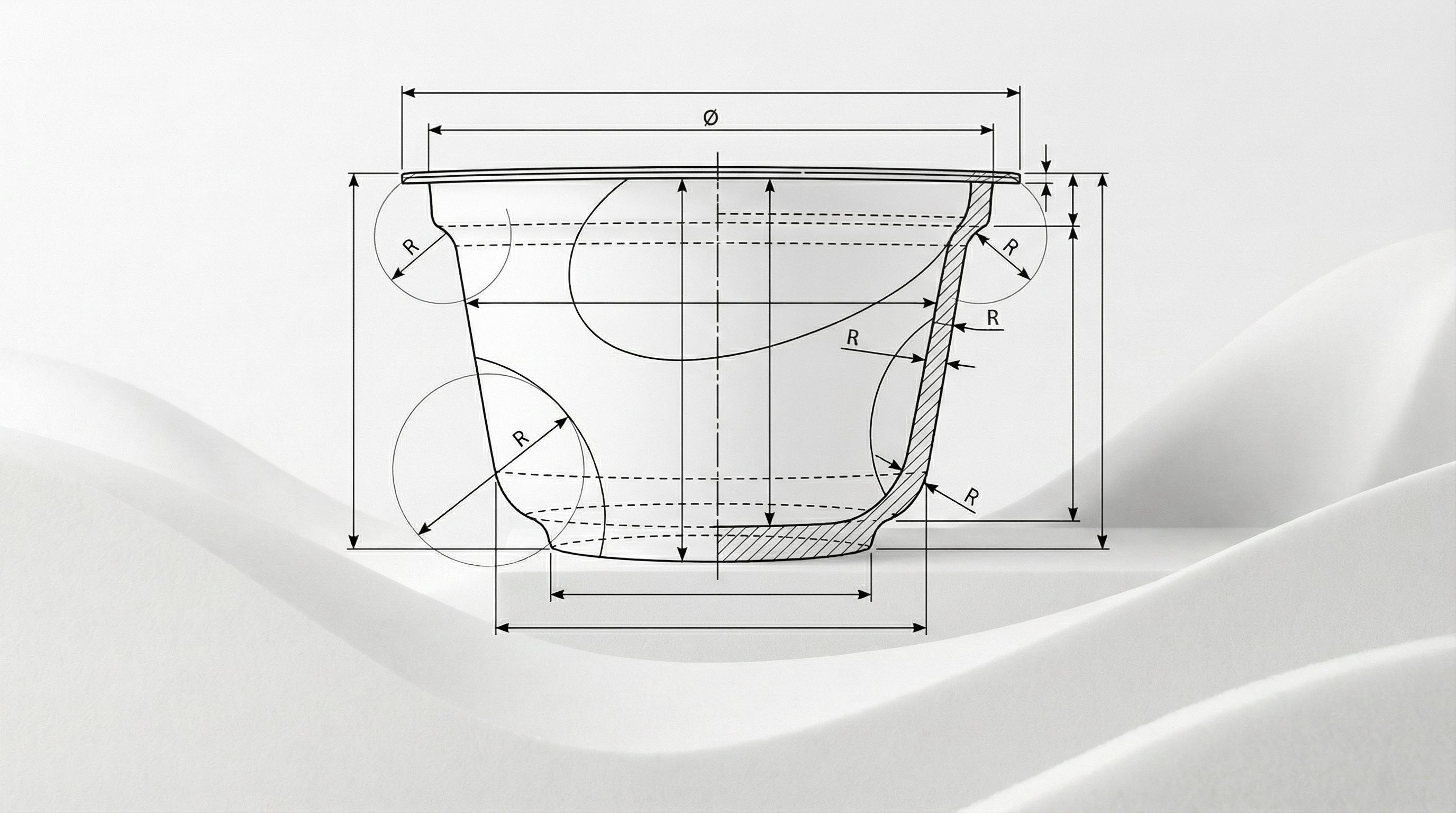
From line to mesh, outline, dimensioned draft, surface topology, and the CAD reference that conditions every generation.
Where the model ends, the hand begins
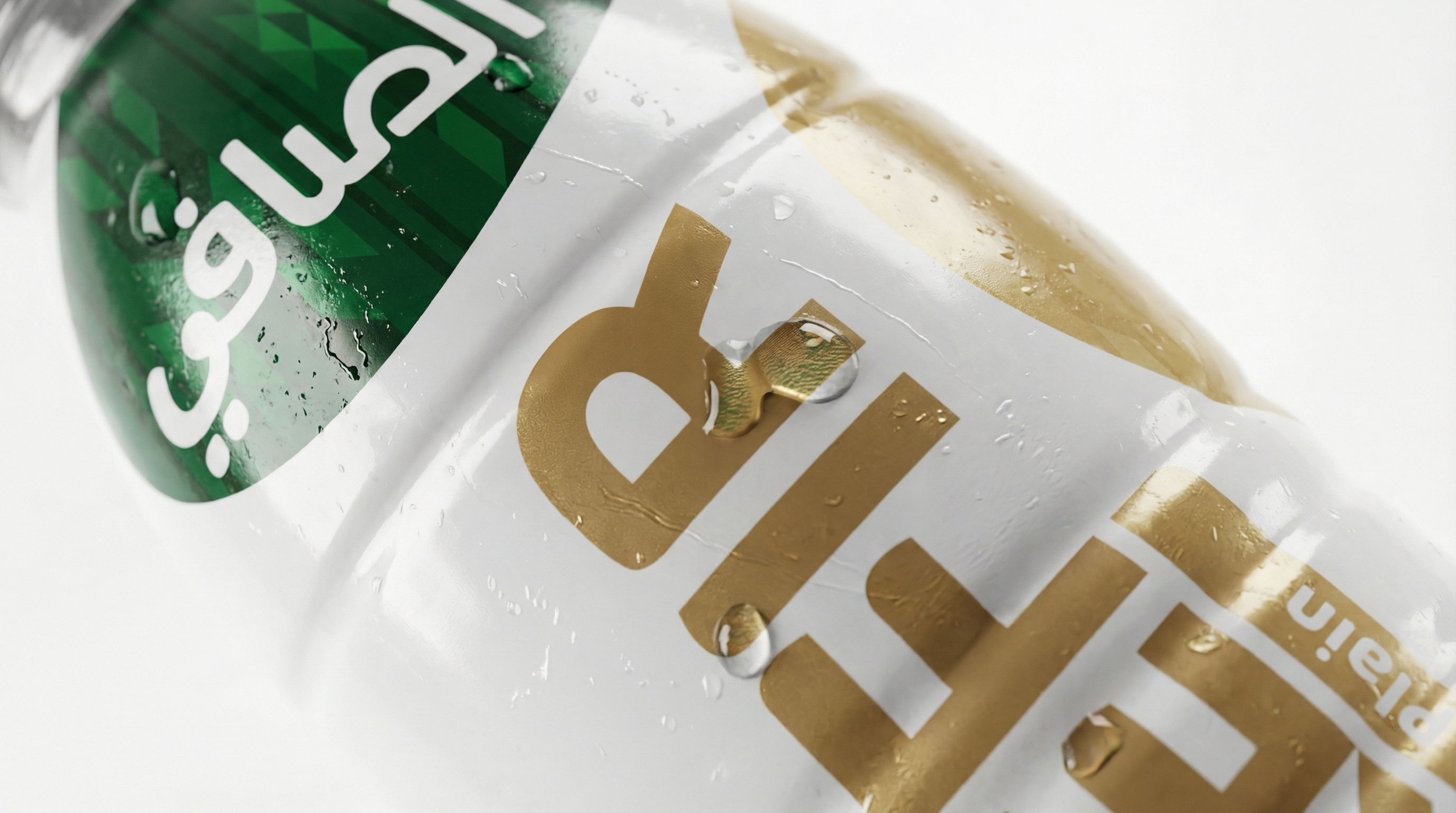
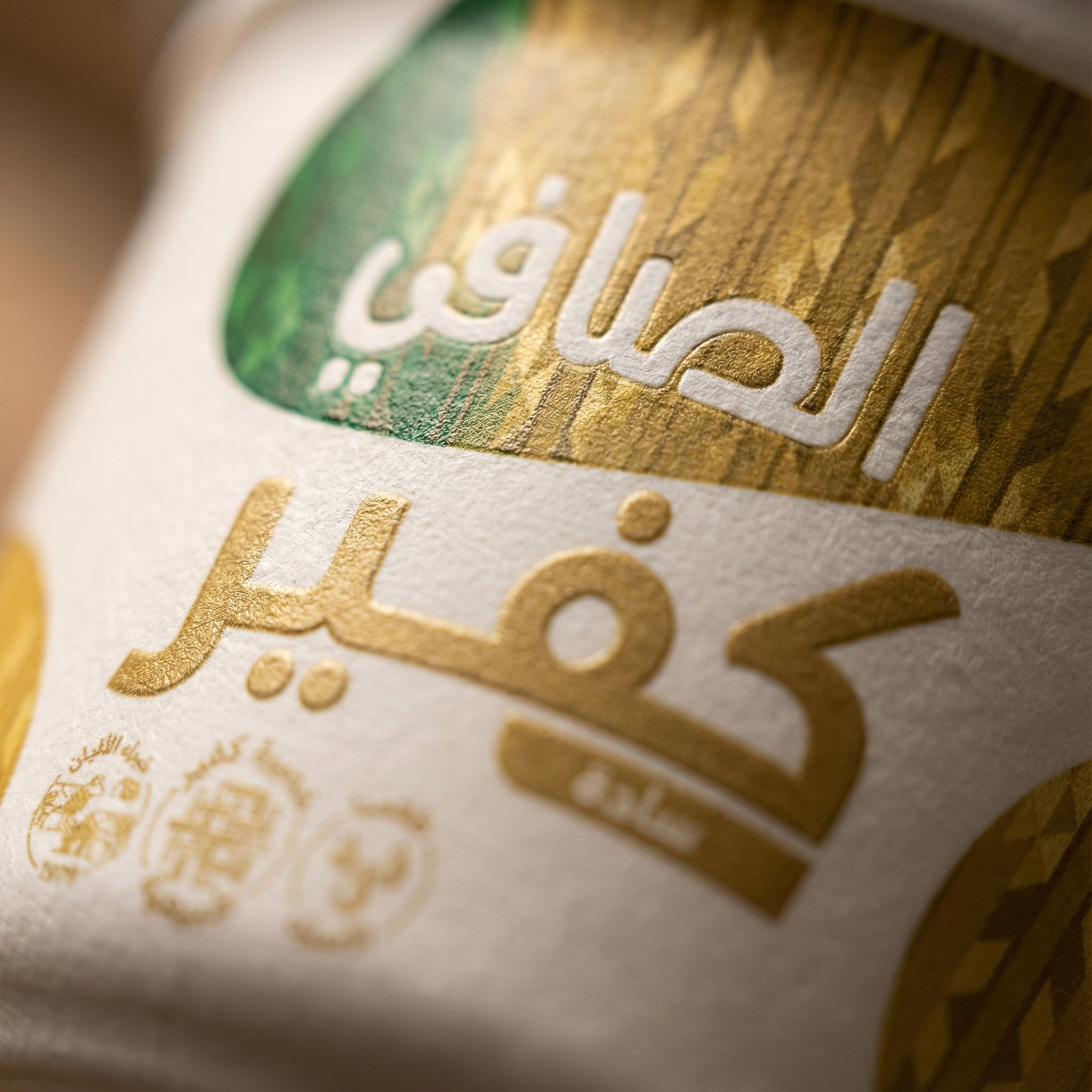
The model gets us to roughly 80%. The last 20%, the part where the brand actually lives, is hand-built in Nuke and Photoshop. The crops below are at 100%: letterform integrity, gold-foil emboss, an engineered cap. This is the resolution a beauty shot demands, and the reason the work never tips into the uncanny.
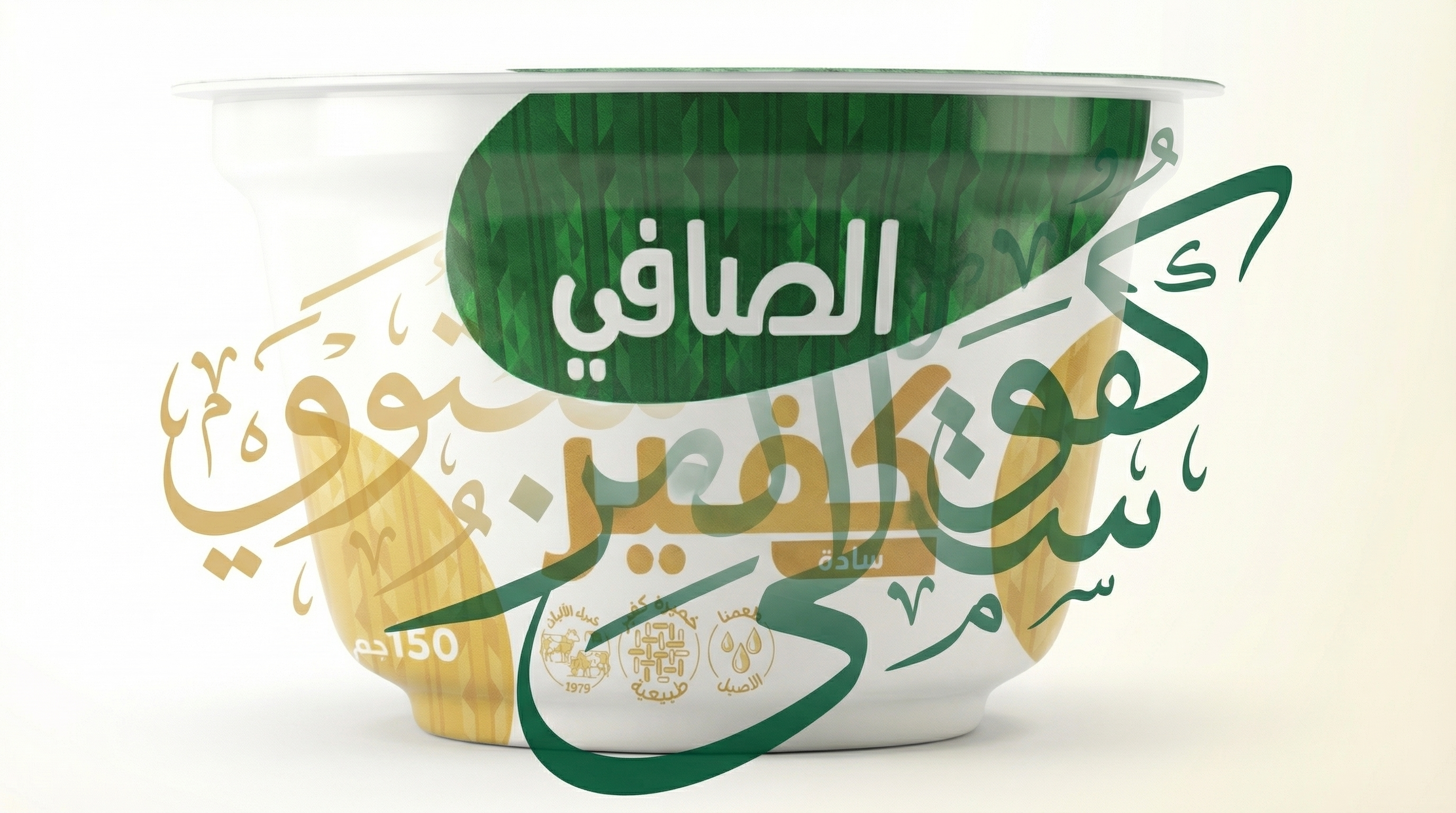
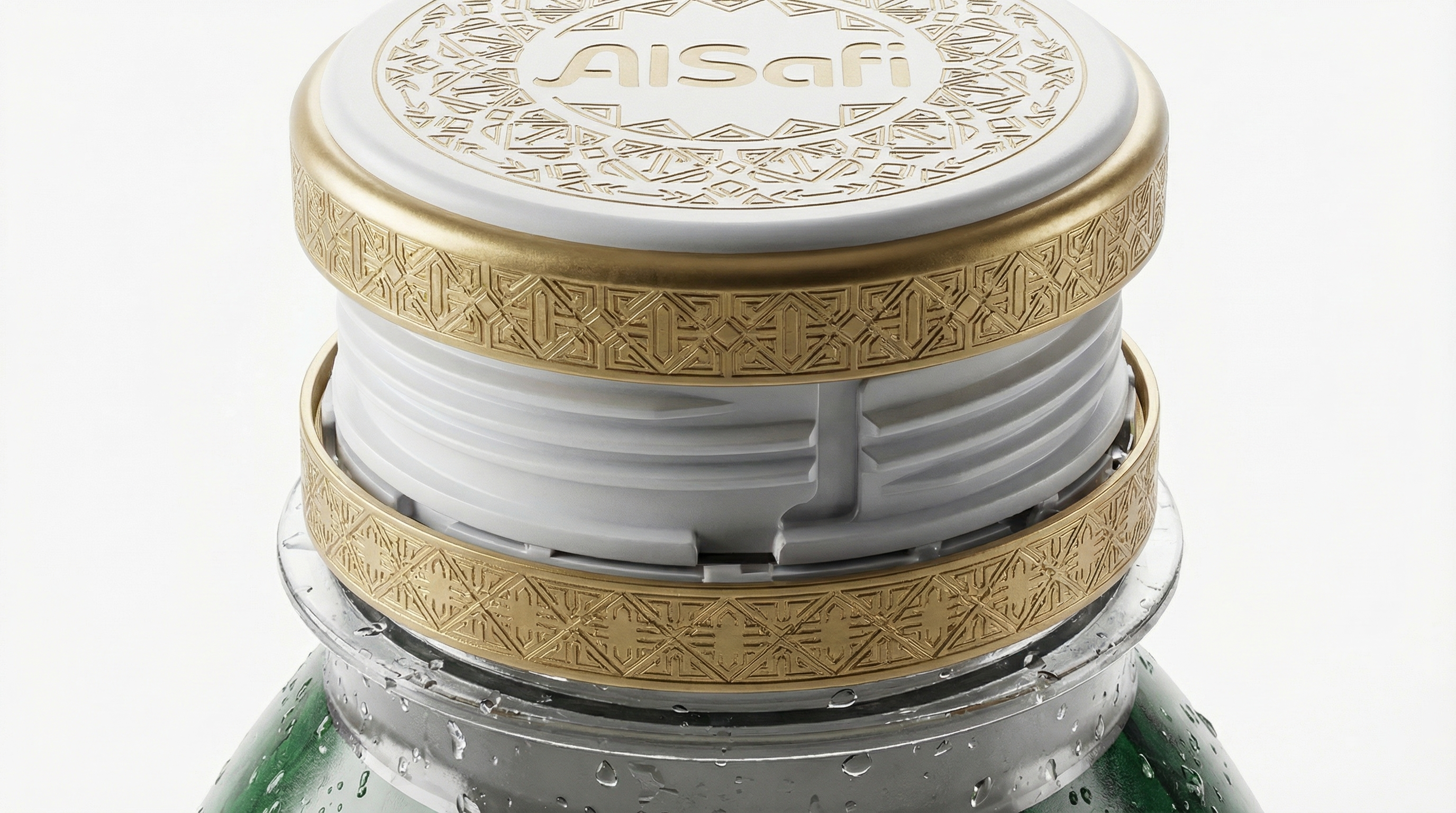
Finishing detail, 100% crops. The real artwork, re-projected and relit, never a generated guess.
Where Nuke earns its keep
We finish where feature VFX finishes: 32-bit, scene-linear, ACEScg. Working in float means highlights on wet glass never clip and the grade stays non-destructive, the same discipline that lets a film shot survive a colour suite.
The single most valuable move: we never trust a generated label. We rebuild it. The real vector artwork is projected onto the bottle’s geometry with Project3D and an STMap / corner-pin so the wordmark is pixel-crisp and correctly warped to the curved surface, then relit to sit in the scene. Around it, the best of Nuke earns its keep, keying and despill to isolate plates, a high-quality denoise to kill diffusion sizzle, Cryptomatte-style mattes for surgical control, and grain plus halation re-added so a synthetic frame reads as one photographed whole.
A single frame proves nothing. The work is making every frame meet the same standard.EINAI · Pipeline
Making AI motion hold still
Motion is where generative work usually fails. Across frames, textures crawl, the logo flickers, and identity drifts from shot to shot. Most AI-made advertising shows the problem in precisely that movement, and resolving it was the central technical challenge of the project.
We treat motion as a plate to be stabilised, not a result to be accepted as given. Optical flow (Kronos / RAFT-class motion vectors) drives retiming and smooths jitter; deflicker passes lock luminance and chroma frame to frame; clean hero detail is propagated along the flow, EBSynth-style, so quality carries forward instead of re-rolling every frame; interpolation lifts the result to a true 25p cadence. The reveal holds because every frame was reconciled to its neighbours rather than generated in isolation.
One light across stills and motion
A campaign falls apart if the poster and the film look like two different days. Everything, every still, every frame of motion, is conformed to a single ACES grade: one show LUT, one set of highlight rolloff, halation and grain choices, applied across the board. Stills are graded as if they were frames of the film, and the film is graded as if every frame were a hero still.
That is what makes the work read as a single, expensive shoot rather than a folder of generations. The intelligence built the frames; the grade made them one campaign.
The reveal had to breathe
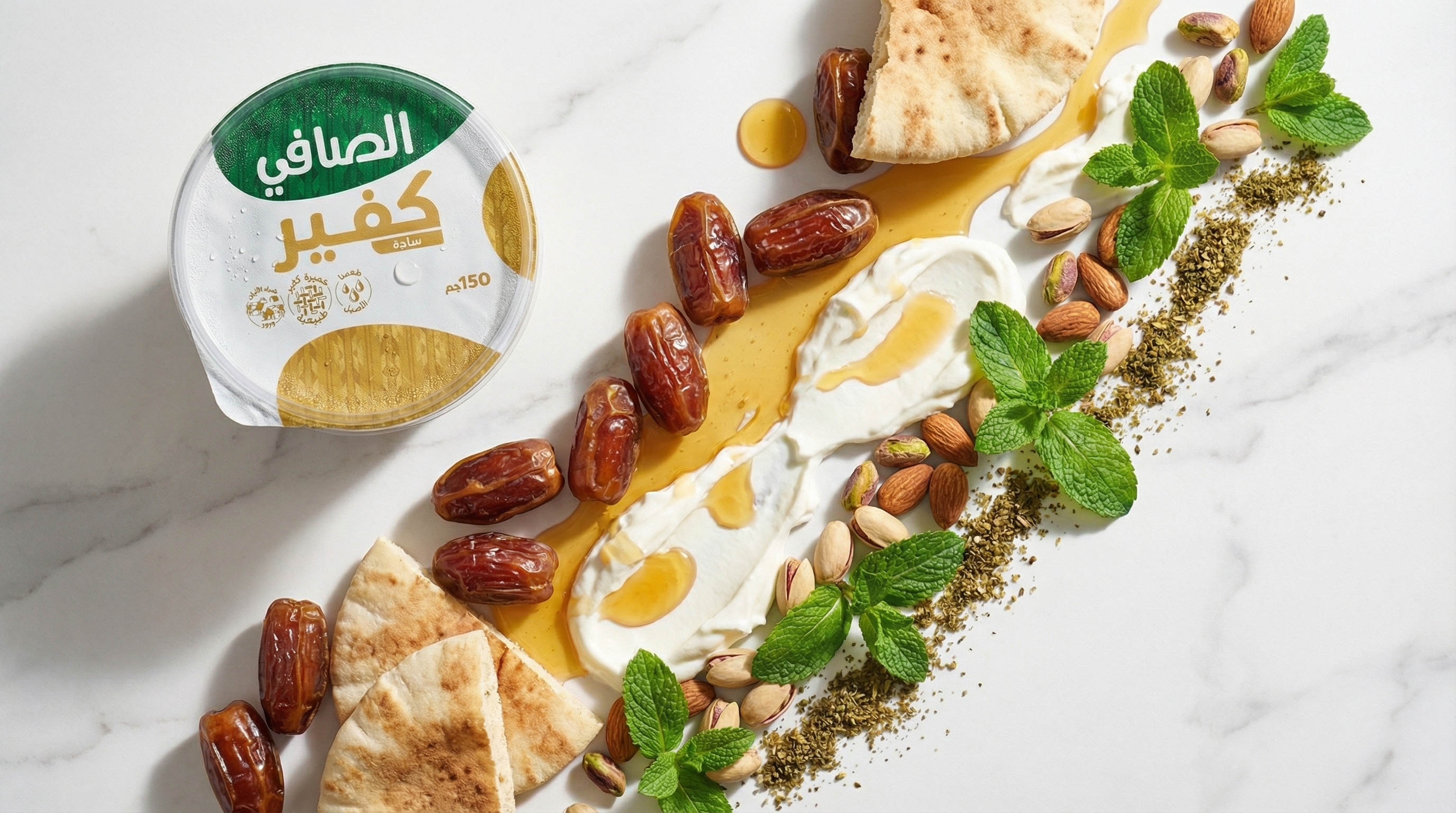
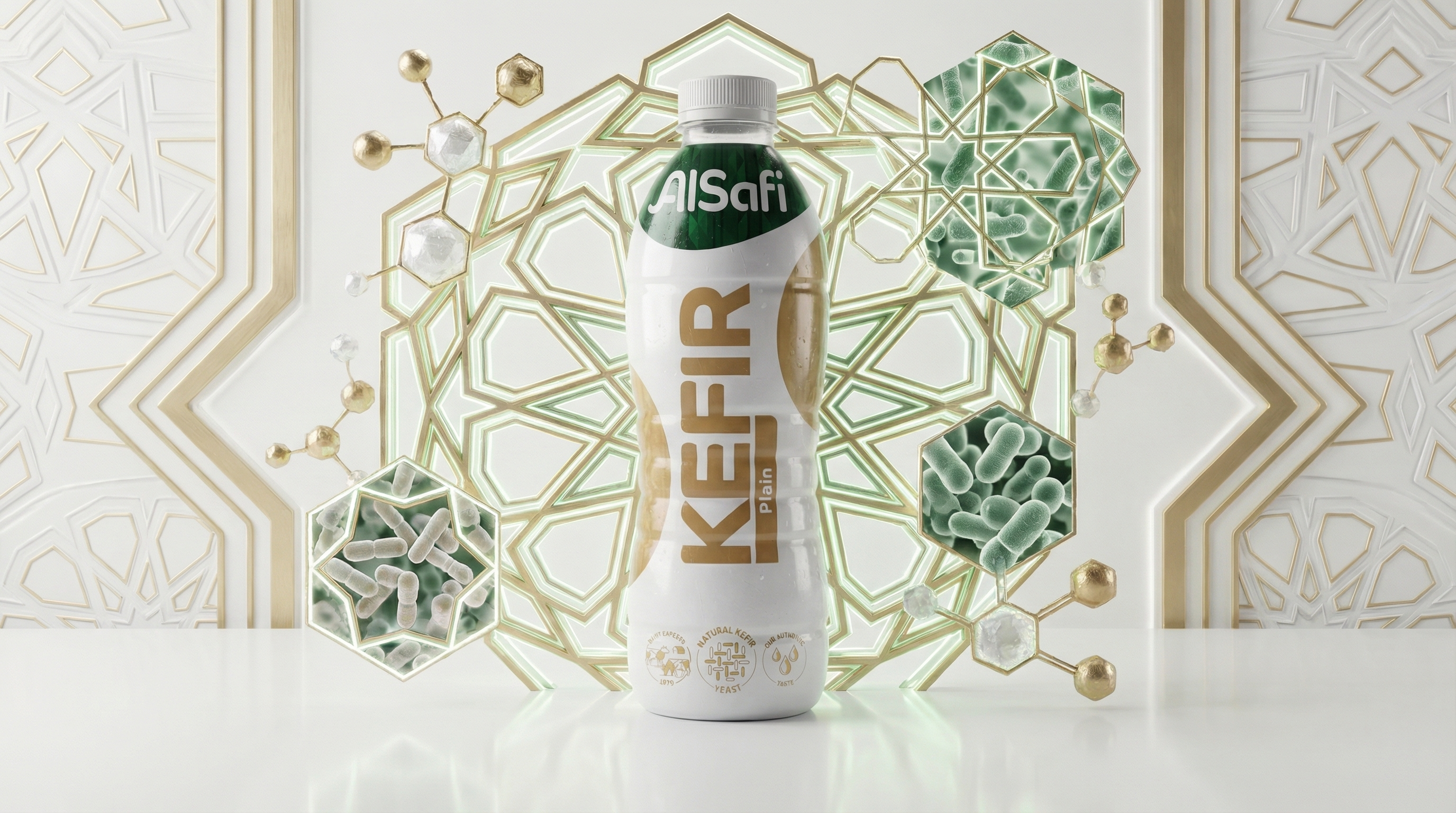
Stills are forgiving; motion is not. A wobble in a logo or a fizz of temporal noise and the spell breaks. The deliverable was never an image, it was a film that felt alive: a Saudi sadu motif draping the bottle in darkness, then lifting to reveal it in one unbroken breath.
We extended the same pipeline into motion, generating, stabilising, and compositing so the bottle moves with the weight of real glass on a real set. No camera was loaded. Every gram of physicality is engineered. This is the official reveal.

Supporting motion, a social-release cut from the same engine, graded to match.
What it meant
- 1st
- AI campaign of this fidelity to ship in the region
- Weeks
- from blank canvas to delivered masters
- ∞
- variations, every surface, on brief, on brand
EINAI’s first frame in the world
This was the project that made EINAI. We proved, to a heritage brand, in a careful market, that an intelligence-led studio could meet the highest standard of craft and beat the clock doing it. Not AI instead of artistry. Artistry, accelerated, with taste holding the wheel.
Everything we build now traces back to this pipeline: explore widely, decide ruthlessly, generate with control, and finish by hand. Al-Safi Kefir was where we learned to do all four at once.
Hundreds of frames. None of them released. This is the private exploration behind the launch, the worlds we built and discarded to find the one that would carry kefir. Concept art is how we think, not what we ship.